Peter Macinkovic: SEO Strategy for Affiliates in 2025/26
Peter Macinkovic, an SEO Lead at Easygo Gaming working on Kick.com and Stake.com, presented a specialized framework for affiliate marketing success in the gaming sector, emphasizing resilience against algorithm updates and leveraging current search engine volatility. His philosophy is rooted in a ba
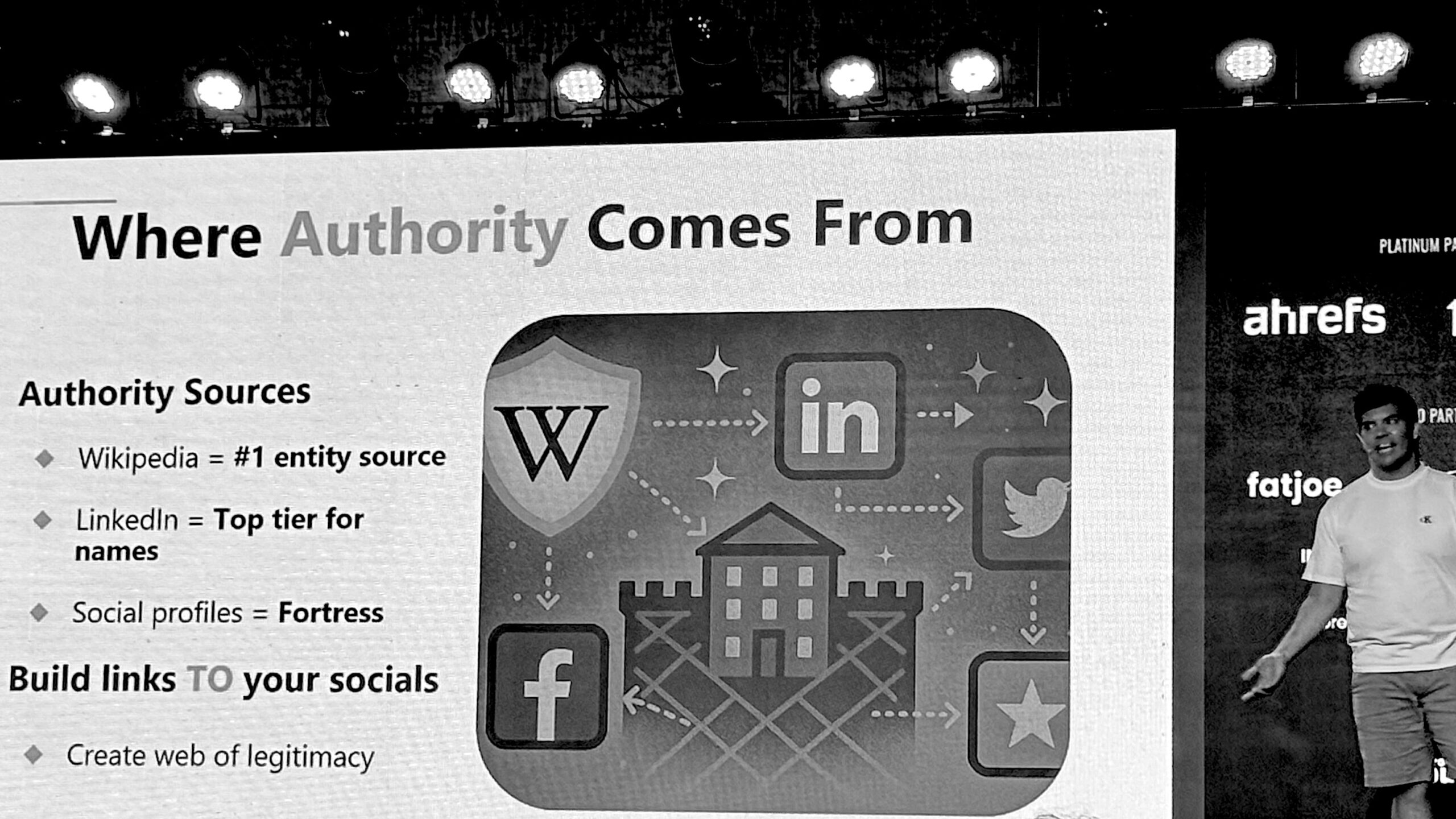
Peter Macinkovic, an SEO Lead at Easygo Gaming working on Kick.com and Stake.com, presented a specialized framework for affiliate marketing success in the gaming sector, emphasizing resilience against algorithm updates and leveraging current search engine volatility. His philosophy is rooted in a background as a Bing search evaluator in 2013, stressing that the modern SEO landscape prioritizes quality and legitimacy over input-driven, chaotic tactics.
Key Metrics & SERP Landscape
| Metric | Insight/Observation | Implication for Affiliates |
|---|---|---|
| SERP Volatility | In a two-year analysis, only one URL remained in the top 10 for a primitive keyword. | Volatility is an opportunity for insertion, not just a risk. |
| Authority Source | 99% of meaningful authority comes from external signals, not internal content. | Focus link-building on authority profiles (LinkedIn, Wikipedia) to help search engines understand importance. |
| Link ROI | Links from sites with actual traffic from Google confer the strongest, safest trust. | Stop prioritizing gameable DR/DA metrics; look for built-in validation. |
| Asset Value | Acquiring aged domains is up to 20x cheaper and 6–12 months quicker than building from scratch. | Perform deep history checks to avoid “dead assets” (previously redirected domains). |
Systems & Processes
Two Dominant SEO Approaches
| Strategy | Focus | Core Assets & Mentality |
|---|---|---|
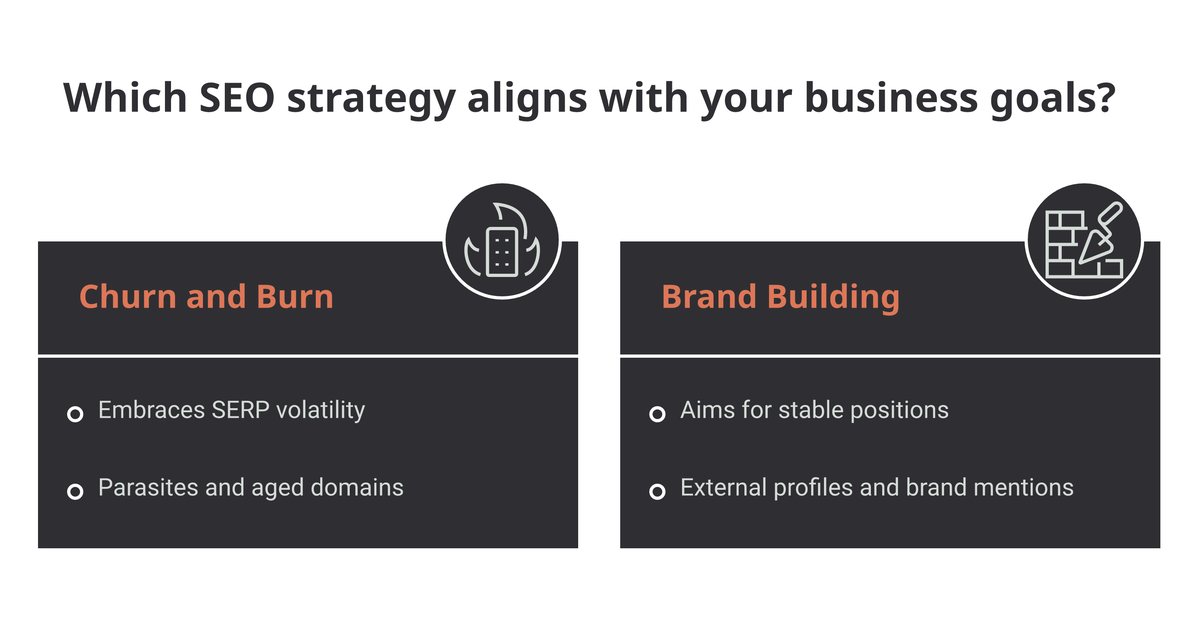
| Churn and Burn | Embraces SERP volatility for rapid, short-term gain. | Parasites, aged domains, and other assets; treat targets as campaigns with no attachment to longevity. |
| Brand Building | Aims for stable positions and long-term existence beyond Google. | External profiles, brand mentions in publications, and a “web of legitimacy” that proves the entity is “real.” |
Survival Strategies for Algorithm Updates
- Diversity is Survival: Diversify link strategies, anchor texts (avoid exact match saturation), and target pages (homepage, money pages, info pages).
- Entity Association: Write in “triples” (subject-predicate-object) both on-site and off-site to help Google’s natural language processing associate the brand with core claims (e.g., “[Brand] is a [thing], [thing] has a [feature]”).
- Trust Signals: Ensure the site meets the search evaluator’s thresholds for trustworthiness: real contact information, founder visibility, verified social accounts, and external references.
- Engagement Countermeasures: Wage “war against the back button” by engaging users immediately (e.g., interactive elements, internal links) to combat bad engagement/pogo-sticking signals.
Risk Management & Advanced Tactics
- PBNs (Private Blog Networks): Macinkovic observes a resurgence, but they are only effective if the individual PBN sites can rank and get traffic on their own.
- Risky Techniques: Optimized anchors and certain backlink providers were devalued in 2024–2025 updates. Use the disavow tool only as a last-resort, surgical measure.
- Parasite SEO: Treat parasite content like your own—optimize for quality, relevance, and top-of-fold visibility for high CTR.
- Skyscraper Insertion: Insert links into ranking pages, but also improve the host page with depth and detail to boost its traffic and protect link ROI.
My Take: What This Means for Solo Publishers
Macinkovic’s framework was built around gaming affiliates with real budgets — but the core logic applies directly to solo publishers running content sites. Here’s what I’d actually prioritize, and what I’d skip.
The March 2026 core update confirmed his thesis in a brutal way: ALM Corp data shows 71% of tracked affiliate sites took ranking hits, while authority blogs and niche experts with strong trust signals gained. This isn’t a coincidence — it’s the “web of legitimacy” Macinkovic describes, playing out at scale. If your site doesn’t have a real entity footprint (Wikipedia mention, verified social profiles, a founder people can actually find online), you’re sitting on a fragile foundation.
The expired domain angle is more urgent now too. Google’s March 2026 spam update specifically targeted expired domain networks — sites built on those lost 90%+ visibility overnight. Macinkovic’s warning about “dead assets” (previously redirected domains) has gone from cautionary to existential. If you’re buying aged domains, the deep-history check isn’t optional anymore.
What I’d actually implement:
- Entity building over link volume. Build your author profile externally — LinkedIn, industry publications, even a Wikipedia mention — before doubling down on link acquisition. This is the foundation Macinkovic says carries 99% of the authority weight.
- Traffic-validated links only. Stop chasing DR and focus on links from sites that get actual Google traffic. The data-study approach to passive link building is one of the cleanest ways to earn these at scale without manual outreach.
- Parasite SEO with realistic expectations. The March 2026 spam update hammered parasite content on major publisher subdomains. It still works — but only when treated as a tactical play for LLM-era visibility, not a permanent traffic source.
- Diversify before you have to. Every affiliate publisher who survived the last three years of volatility had traffic diversity baked in early. If 80%+ of your sessions come from organic Google, that’s not a strategy — that’s a single point of failure.
What I’d skip: the churn-and-burn playbook unless you’re running it as a dedicated campaign with separate assets. For content sites where the brand matters, the link diversification rules still apply. And the “entity triple” writing technique (subject-predicate-object framing for NLP) is worth testing — it’s low-effort and the LLM-driven ranking shift makes it more relevant now than when Macinkovic first described it.
Actionable Takeaways
- Study Overperformers: Analyze competitor sites with modest Domain Rating (DR) but consistent traffic growth (6-18 months) to identify patterns such as hidden intent coverage or long-tail scaffolding. Replicate the pattern, not the exact tactics.
- Reinforce Authority Profiles: Audit your external footprint and actively build links to high-trust profiles (LinkedIn, social accounts) to aid search engine crawling and signal consolidation.
- Prioritize Engagement: Implement immediate engagement modules above the fold to reduce the back-button signal (pogo-sticking) and improve click signals.
- Diversify Link Mix: Proactively diversify your anchor text and referring pages to avoid over-reliance on exact-match anchors, particularly on money pages.
- Think Beyond the Website: Peter Macinkovic recommends applying SEO systems to non-website channels (YouTube, social, community) and repurposing high-interest media assets (like influencer content) to drive qualified acquisition, building assets that would exist if Google disappeared tomorrow.