Doug Cunnington’s Masterclass on Podcasting: Unlocking Growth and Monetization Opportunities
TL;DR: The Easy Summary The speaker, Doug Cunnington, passionately advocates for starting a podcast, highlighting its numerous benefits for businesses and entrepreneurs. He discusses various monetization strategies, including ad revenue, affiliate marketing, and selling one’s own products or service

TL;DR: The Easy Summary
The speaker, Doug Cunnington, passionately advocates for starting a podcast, highlighting its numerous benefits for businesses and entrepreneurs. He discusses various monetization strategies, including ad revenue, affiliate marketing, and selling one’s own products or services. Podcasting is presented as a powerful networking tool, enabling connections with experts, authors, and potential collaborators. Doug emphasizes how podcasting fosters audience engagement, improves communication skills, expands reach and authority, and offers flexibility in content creation. While acknowledging that podcasting may not suit everyone, he provides guidance on personas that might not be a good fit. The talk concludes with actionable tips for starting a podcast or securing guest spots.
Monetization Opportunities
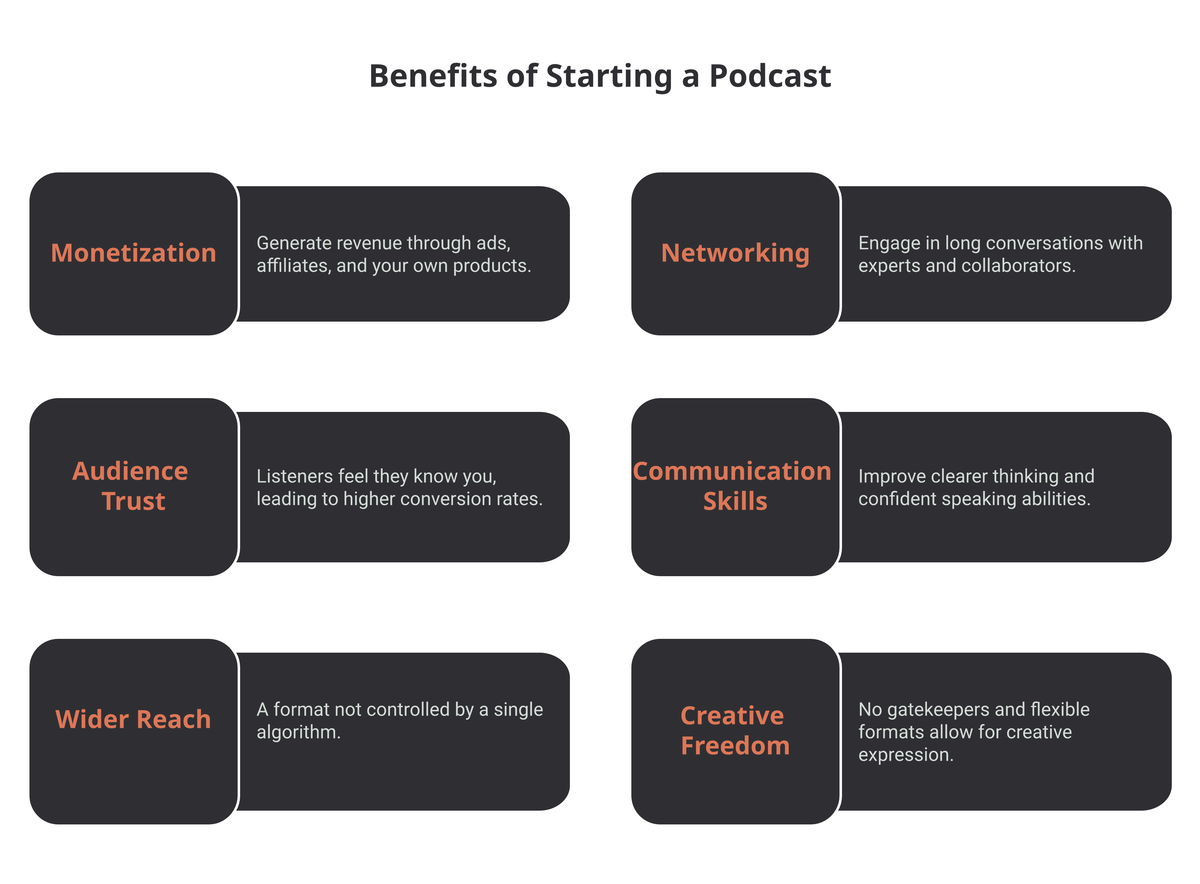
Doug outlines several ways to monetize a podcast, including ad revenue (with earnings influenced by niche and audience demographics), affiliate marketing (earning commissions by recommending products), and selling one’s own products or services (offering the highest profit margins). He stresses that podcasting can help increase sales of existing products or services.
Networking and Relationship Building
Podcasting facilitates networking opportunities by enabling long-form conversations with experts, authors, and potential collaborators. Doug shares personal experiences of connecting with well-known individuals and securing speaking engagements at conferences through his podcast.
Audience Engagement and Trust Building
Regular podcast listeners develop a strong connection with the host, feeling like they know them personally. This trust can lead to higher conversion rates for products or services promoted on the podcast. Cunnington also highlights the potential for audience support and feedback.
Improving Communication Skills
Podcasting helps improve various communication skills, including voice modulation, active listening, clear thinking, and structured communication. It also challenges individuals to overcome fears and become more confident in speaking.
Expanding Reach and Flexibility
Podcasting allows creators to reach a wider audience than other content formats and cater to different consumption preferences. It offers flexibility in scheduling, content formats (interviews, solo episodes, roundtables, etc.), and repurposing existing content.
Creative Expression and Independence
Podcasting provides an open platform for sharing ideas and being creative without limits or gatekeepers. Doug emphasizes the ease of launching a podcast and the independence it offers.
Considerations and Potential Drawbacks
Doug acknowledges that podcasting may not be suitable for unenthusiastic experts, inconsistent creators, those averse to technology, or those solely focused on quick monetization. He suggests evaluating one’s passion, commitment, and realistic expectations before starting a podcast.
My Take: What This Means for Solo Publishers
Doug’s framing here is accurate, but he’s speaking to a broad entrepreneurial crowd. Here’s the translation for solo affiliate publishers specifically.
The monetization angle Doug pushes hardest — ad revenue from downloads — is the wrong priority for a solo publisher. Unless you’re in a high-CPM niche and grinding toward 50k+ monthly downloads, podcast ad revenue alone won’t move the needle. Where podcasting actually matters for affiliate publishers is the trust layer. Listeners who finish full episodes have a fundamentally different relationship with you than someone who skimmed a listicle. That intimacy converts. If your affiliate marketing strategy currently relies on cold organic traffic hitting a review post, a podcast gives the warm second-touch that pushes fence-sitters to click and buy.
The networking point is underrated. Solo publishers land link placement conversations, joint ventures, and product partnerships through podcast relationships that would’ve taken years to build through cold email. If you’re already in the business of building and selling digital assets, a podcast builds your personal brand in a way that raises perceived authority — and exit multiples.
The real 2026 argument for podcasting is traffic diversification. Google’s volatility has made single-channel reliance reckless. A podcast gives you a direct-access audience that no algorithm update can take away. Traffic diversification stopped being optional after the 2024–2025 HCU wave — the solo publishers still standing are the ones who diversified early. Email newsletters serve the same “own your audience” function, and pairing both amplifies the effect considerably.
What to skip: don’t start a podcast expecting 10 episodes to tell you anything. The compounding returns Doug describes take 12–24 months minimum. If you’re not ready to commit to at least two seasons, the setup cost outweighs the returns for a typical affiliate site owner. Start as a guest on shows in your niche first — same audience-building benefit, zero production overhead. If you’re running review-focused affiliate sites, appearing on a relevant podcast beats cold outreach for building the editorial relationships that drive passive link acquisition.
Action Items
- Sign up for the waitlist at niche site project dot com slash pod accelerator to participate in Doug’s podcast boot camp and mastermind group.
- Explore free training resources provided by podcast hosting platforms to learn about podcasting.
- Create a one-pager resume-style document highlighting your expertise and potential topics to secure guest spots on relevant podcasts.
- Seek warm introductions from friends or connections who have been guests on podcasts you’re interested in appearing on.
Sources: Doug Cunnington’s talk on podcasting for entrepreneurs via the Niche Site Project. Related reading on RankingHacks: Effective Affiliate Marketing Strategies; The Diversification Playbook; John Dykstra on Email Newsletters.