Inside Derek Hales’ Journey to Building Successful Affiliate Review Sites
Introduction In a compelling interview between Gael Breton and Derek Hales, the mastermind behind successful affiliate review sites like NAPLAB and Modern Castle, Derek shared his journey and strategies. This blog post refines the key points from the interview, spotlighting Derek’s approach to creat

Introduction
In a compelling interview between Gael Breton and Derek Hales, the mastermind behind successful affiliate review sites like NAPLAB and Modern Castle, Derek shared his journey and strategies. This blog post refines the key points from the interview, spotlighting Derek’s approach to creating in-depth, data-driven reviews and building authoritative content.
Building Trust through Rigorous Product Testing
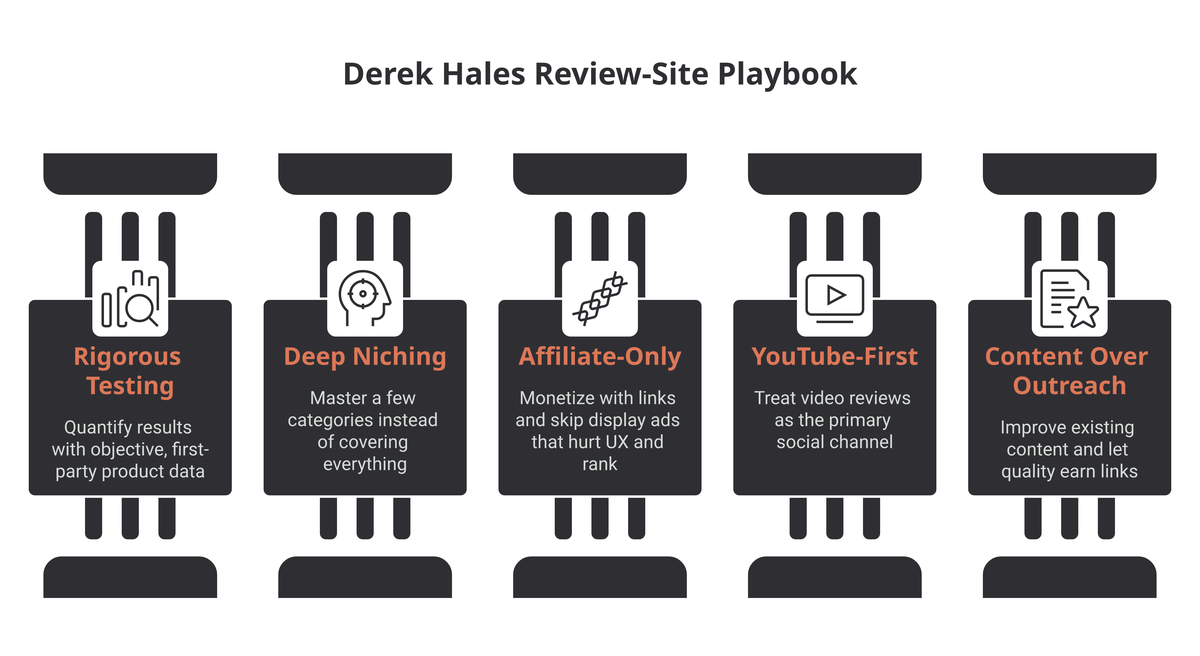
Derek’s primary differentiator is his focus on extensive and objective product testing. He emphasizes the importance of quantifying results to provide objective data, which helps in making concrete product recommendations. This rigorous approach has set his content apart and established his sites as trustworthy sources of information.
The Power of Focus and Expertise
Derek believes in the power of niching down and mastering specific categories. His decision to concentrate on mattresses and home products rather than covering a wide range of topics has established his authority and expertise in these areas. This focus on quality over quantity ensures his content is both reliable and valuable.
Challenges with Google’s Quality Evaluation
Despite Google’s efforts to reward high-quality sites, Derek noted that lower-quality sites often still rank well. This inconsistency represents an ongoing challenge for quality content creators like Derek, who invest considerable effort into their work.
Social Media: A Secondary Focus
For Derek, social media, apart from YouTube, plays a secondary role. YouTube is pivotal for his strategy, as video reviews are increasingly expected by consumers. However, other social platforms haven’t offered much value to his business model.
Monetization and User Experience
Derek’s monetization strategy is purely through affiliate links. He found that display ads negatively impacted rankings and distracted from the core content. Maintaining a high-quality user experience remains his top priority.
The Challenge of Link Building
Link building remains a weak area in Derek’s strategy, particularly challenging in his niche. He prefers to invest time in content improvement over outreach, with the belief that high-quality content will naturally attract links over time.
Future Strategy: Improving Existing Sites
Looking ahead, Derek’s strategy is centered on improving his existing sites rather than expanding into new ones. He sees significant potential in further growing and enhancing NAPLAB and Modern Castle.
My Take: What This Means for Solo Publishers
Derek’s interview aged well. What he was doing back then — rigorous physical testing, deep niche focus, zero display ads — looks prescient now that the March 2026 core update slammed aggregators and handed visibility back to “niche experts.” If you run a lean affiliate review operation, that should feel like validation.
Three things stand out as directly actionable for solo publishers:
Testing data is now citation bait. AI Overviews already fire on 13%+ of searches and climbing. When Google’s LLM is synthesizing an answer about the best mattress or air purifier, it reaches for sources with quantified, original data — not listicles. Derek’s obsession with measurable test results (airflow CFM, firmness ratings, decibel readings) isn’t just about reader trust. It’s what gets you cited in AI-generated responses. If your data-driven SEO content strategy doesn’t include first-party test data, you’re competing on vibes.
Depth over breadth compounds. The temptation for solo publishers is to drift — add a new category, chase a trending keyword, launch a second site. Derek’s decision to double down on NAPLAB and Modern Castle rather than sprawl is exactly what a systematic content reoptimization framework looks like in practice. The depth you’ve already built is your moat. More sites means diluted testing capacity means thinner content everywhere.
The link building gap is real, but solvable. Derek admits link acquisition is a weak spot. It is for most solo operators. The practical fix isn’t outreach — it’s passive link building through data studies. Original test data earns citations organically, which loops back to why the testing obsession matters beyond rankings.
What I’d push back on: YouTube as the only social channel worth pursuing. That was true in 2022. In 2026, with Pinterest and LinkedIn both driving meaningful affiliate referrals in home and lifestyle verticals, a tighter affiliate SEO strategy for solo operators includes at least one social signal loop — not because social directly influences rankings, but because it diversifies the entry points into your testing content.
Derek’s playbook is right. The only edit I’d make: treat your test data as a distribution asset, not just a trust signal.
Action Items for Affiliate Site Growth
Inspired by Derek’s strategies, here are actionable steps for affiliate site owners:
- Critically Review Your Content: Assess whether your content is genuinely helpful and user-friendly. Strive for continuous improvement.
- Consider Focused Niching: Identify categories where you can uniquely excel and dominate.
- Showcase Product Testing and Data: Brainstorm ways to incorporate firsthand product testing and data into your site.
- Evaluate Topical Authority vs. Business Impact: Ensure you’re not just optimizing for shallow authority but creating content with a tangible business impact.
Conclusion
Derek’s insights provide a valuable roadmap for building successful affiliate review sites. His emphasis on quality, focused niching, and user experience is a testament to the power of detailed, data-driven content in establishing authority and trust in the competitive world of affiliate marketing.

Watch “Using EEAT To Ace Google’s Algorithm” on YouTube