Cyrus Shepard’s Deep Dive into Google’s Search Mechanisms
Introduction Cyrus Shepard, in his enlightening presentation, unraveled the intricacies of how Google’s search engine operates behind the scenes. This enhanced blog post aims to refine his key points, focusing on the role of search quality rater guidelines, user interaction signals, and the essentia

Introduction
Cyrus Shepard, in his enlightening presentation, unraveled the intricacies of how Google’s search engine operates behind the scenes. This enhanced blog post aims to refine his key points, focusing on the role of search quality rater guidelines, user interaction signals, and the essential elements of rankings.
How Google Utilizes Quality Raters
Shepard emphasized the significant role of human quality raters employed by Google. These raters assess page quality and relevance, providing crucial training data for Google’s machine learning algorithms. This process is integral to how Google evaluates and ranks webpages.
Google’s Limited Understanding of Webpages
A striking revelation from Google’s internal documents, as discussed by Shepard, is that Google doesn’t fully understand webpage content. Instead, it relies on observing user interactions, such as clicks, hovers, and scroll depth, to gauge a page’s relevance and usefulness.
The Three Pillars of Ranking
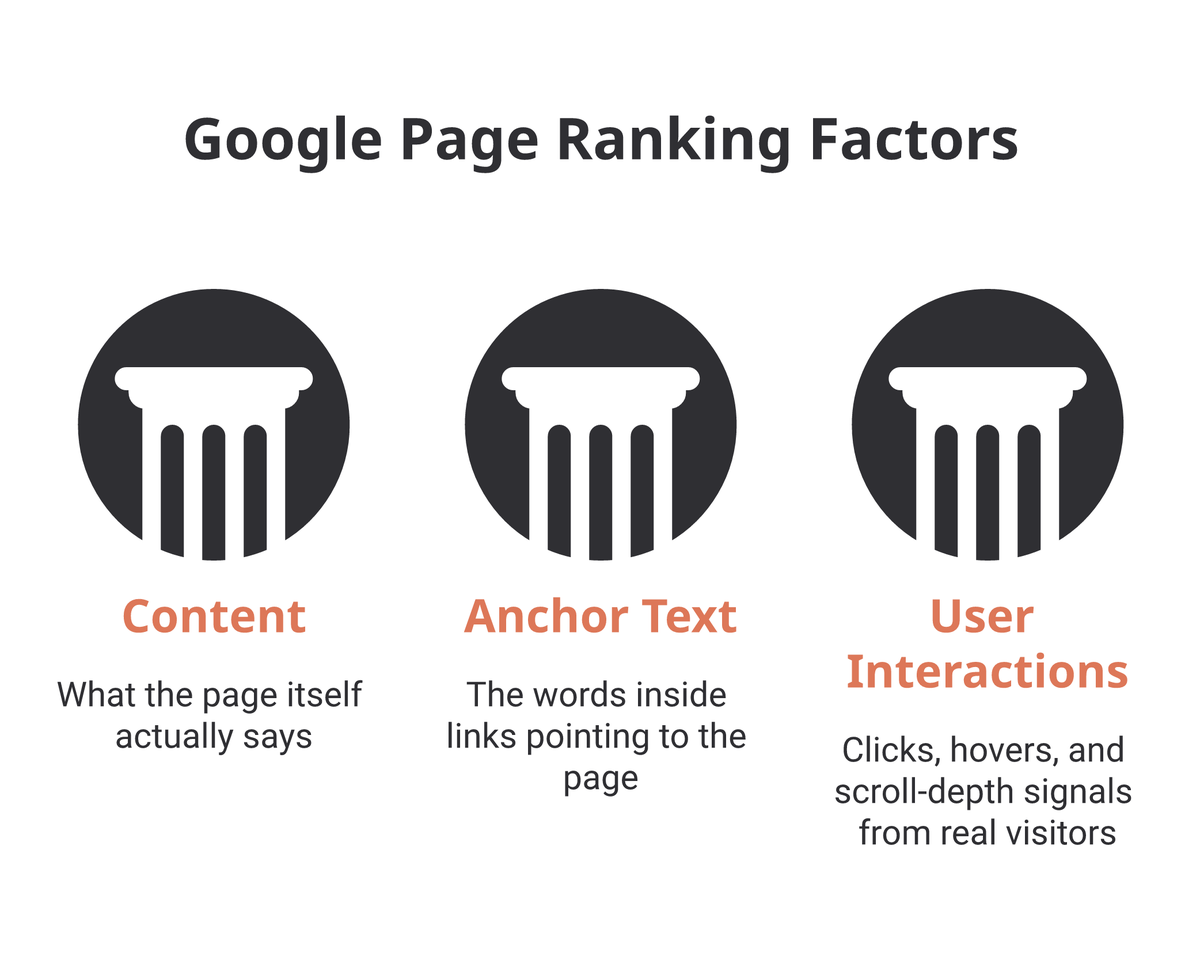
According to Google’s internal documentation, Shepard highlighted three core pillars of ranking: content, anchor text in links, and user interactions. He noted that without user data, Google’s ability to deliver relevant search results would be significantly diminished.
Evaluating Pages from a User’s Perspective
Drawing from his experience as a quality rater, Shepard shared that evaluating webpages involves focusing on aspects like reputation, originality, effort, and the extent to which user needs are met, rather than just keywords.
The Crucial Role of Reputation
Shepard underscored that both negative reviews and positive citations can greatly influence a site’s rankings. Positive affiliate links and paid links can also serve as shortcuts to building a website’s reputation.
Designing for Quick User Impressions
Quality raters often only glance briefly at websites. Shepard stressed the importance of quickly demonstrating expertise through website design elements like navigation links and the footer.
Providing Answers More Efficiently
Improving user engagement by positioning key answers and content higher on pages is aligned with the preferences of quality raters. This approach can enhance user experience and engagement.
My Take: What This Means for Solo Publishers
Shepard’s work cuts through a lot of noise. A few things hit differently when you’re running affiliate or content sites rather than an enterprise SEO operation.
The reputation finding is the most underrated part of this. He notes that positive affiliate links and paid links can serve as reputation shortcuts — meaning your outbound affiliate links aren’t just revenue streams, they’re potentially signaling to Google what your site is actually about and who vouches for it. That meshes with what the Google Search API leak exposed: reputation scoring is far more granular and multi-signal than a simple backlink count.
The micro-interaction data is more uncomfortable. Google isn’t just measuring clicks — it’s tracking hovers, scroll depth, and dwell time across a multidimensional behavioral fingerprint. For affiliate content, this means a product comparison table that gets scrolled past in three seconds is a signal in itself. You need engagement, not just rankings. This is why understanding Google’s ranking mechanisms beyond keywords matters — behavioral signals are baked in at every layer.
Here’s the twist that most people will miss: in Shepard’s recent 400-site traffic study, first-hand experience and personal perspectives showed zero correlation with traffic gains. Given how loudly Google has pushed EEAT, that’s a striking finding. What did correlate were structural signals — sites with products, transactional utility, and harder-to-replicate assets. For solo affiliate publishers, this is good news. You don’t need to make your content sound like a personal diary. You need structural credibility: clean design, clear expertise cues, and genuine reputation through citations and links.
The quality rater lens is also useful to internalize. Raters spend seconds on a page. If your navigation, footer, and above-the-fold content don’t immediately signal “this is a legit site,” you lose — regardless of content depth. Combine that with systematic content reoptimization to surface your best answers earlier, and you’re addressing both the algorithmic scoring and the human evaluation layer at once.
Bottom line: reputation signals, click quality, and fast expertise credibility matter more right now than volume or “authentic voice.” That’s a much more manageable target for a solo publisher.
Action Items for SEO Optimization
To leverage Shepard’s insights, here are actionable steps:
- Reputation Review: Assess and improve your site’s reputation and citations.
- Incorporate Social Proof: Add elements like testimonials, awards, and press mentions.
- Clarify Expertise: Use navigation links, footers, and design elements to clearly display your expertise.
- Optimize Content Placement: Move crucial answers and content higher on your key pages.
- Monitor User Interactions: Use tools like Google Search Console to track and improve user interaction metrics.
Conclusion
Cyrus Shepard’s presentation offers a deeper understanding of Google’s search algorithms and the importance of user interaction signals. By adopting these strategies, SEO professionals and website owners can enhance their site’s performance in Google’s search results, focusing on user experience and the quality raters’ perspective.