The New SEO Formula: Adapting to AI Search and Information Retrieval
The landscape of search is fundamentally shifting as AI-generated content surpasses human-created content online, leading to a new era where optimization focuses on information retrieval rather than traditional keyword density. As presented by Robert Niechcial, the challenge for SEO professionals is
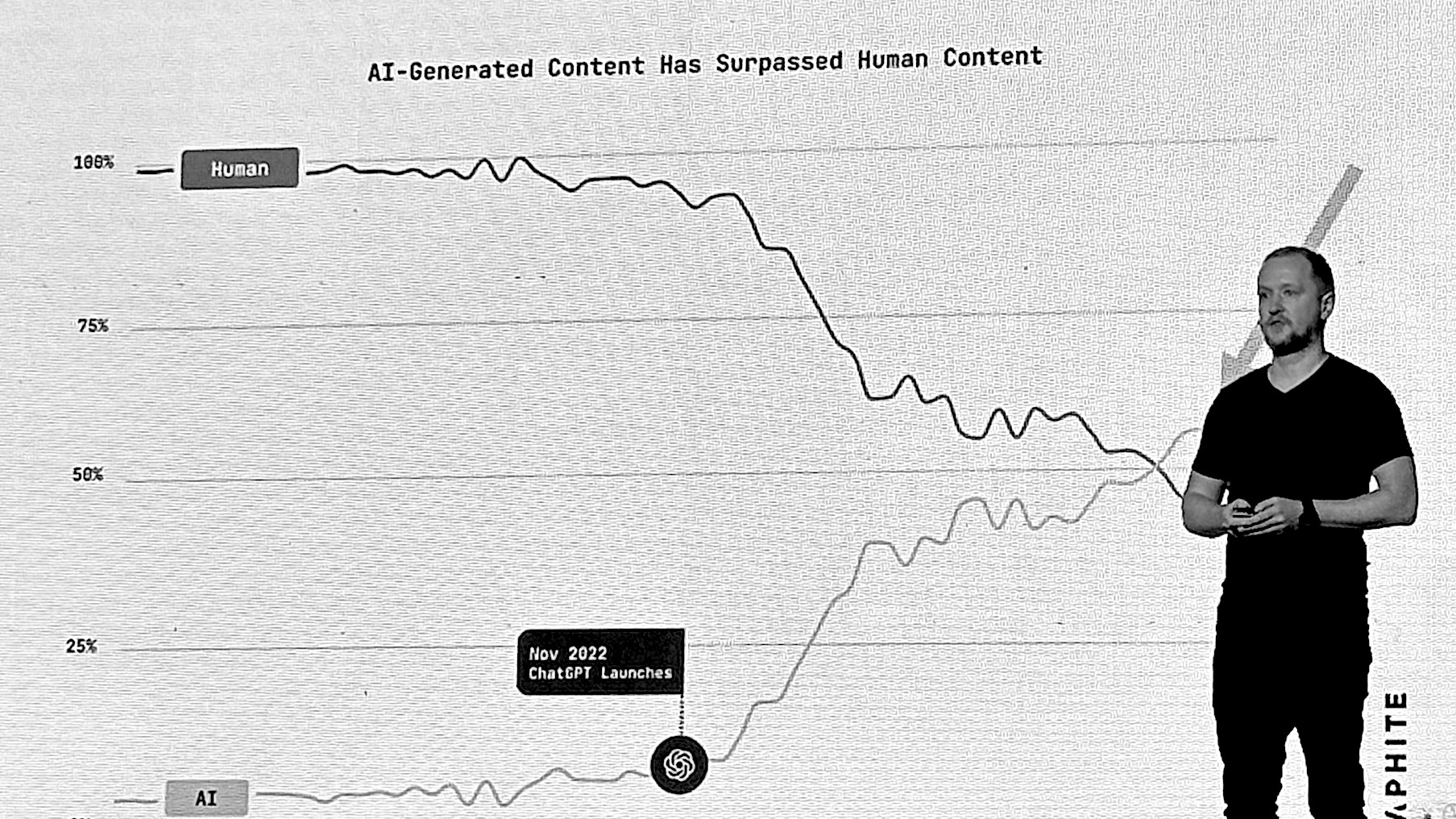
The landscape of search is fundamentally shifting as AI-generated content surpasses human-created content online, leading to a new era where optimization focuses on information retrieval rather than traditional keyword density. As presented by Robert Niechcial, the challenge for SEO professionals is to adapt to this “third industrial revolution” by delivering structured, semantically rich, and up-to-date content that is optimized for AI synthesis.
Key Metrics and Critical Data
| System/Process | Metric/Value | Implication for Content |
|---|---|---|
| AI-Generated Content | Forecast to reach 90% of web content within a year (Oxford University). | Increases risk of “LLM brain rot” (deterioration of reasoning from poor training data). |
| Traditional Clicks | Declining due to “zero click marketing.” | SEO focus shifts from driving clicks to achieving AI synthesis/answer inclusion. |
| Gemini 2.5 Flash Hallucination | 38% without external data. | Search engines critically need factual, quality content from websites for grounding. |
| Gemini 2.5 Flash Hallucination | 1.3% when fed accurate information. | Validates the ongoing need for websites as the source of knowledge for AI synthesis. |
| Content Age | AI systems favor content less than one year old. | Requires a quarterly freshness-update schedule for priority pages. |
The AI Search Operating Model
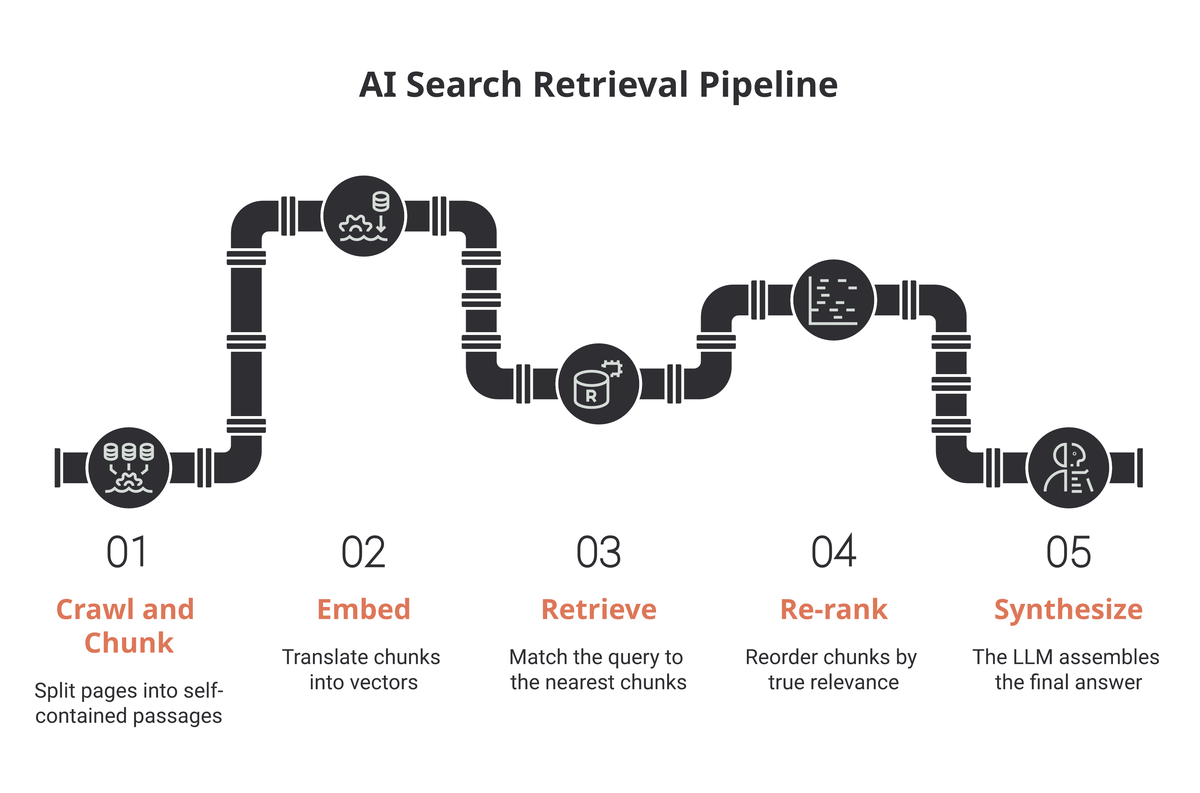
Successful SEO now requires aligning content with the Retrieval-Augmented Generation (RAG) pipeline that powers AI search. The goal is to be chunkable, retrievable, and re-rankable.
Information Retrieval Pipeline
- Crawling and Chunking: Search systems split documents into valuable, self-contained passages/chunks.
- Embeddings and Vector Space: Content chunks are translated into vectors and stored in vector databases, allowing for semantic (meaning-based) matching.
- Query Embedding and Retrieval: User queries are embedded and matched to the most relevant content chunks based on semantic similarity.
- Re-ranking: Specialized models (e.g., Cohere ReRanker) measure true relevance and reorder the initial retrieved chunks to find the optimal set for synthesis.
- Synthesis: The LLM generates the final answer by assembling the highly-ranked chunks.
Core Strategy: Knowledge Engineering
Optimization must move beyond keywords to comprehensive Context Engineering and Knowledge Engineering.
| Concept | Definition | SEO Application |
|---|---|---|
| Knowledge Graph | Represents relationships between entities (e.g., Steve Jobs > co-founded > Apple). | Implement internal linking based on semantic relationships, not just lexical matching. |
| Information Graph | Represents depth of factual information using semantic triples (subject–predicate–object format). | Encode factual assertions at scale to increase machine-interpretability and retrieval quality. |
| Topical Centroid | The semantic center of a website’s focus, as evaluated by embeddings. | Consolidate content around core business objectives; remove off-topic content to tighten the site’s semantic radius. |
Four Pillars for Success in AI Search
Niechcial’s presentation outlined practical tactics for optimizing content for retrieval and synthesis:
- Format: Identify and scale formats (e.g., definitions, glossaries, lists, tables) that consistently win AI search coverage within your domain.
- Length: Increase content length to ensure deeper semantic coverage and a richer density of information triples.
- Freshness: Prioritize content that is less than one year old; establish a quarterly refresh cycle for key pages.
- Signals: Focus on user-centric signals like readability, structuring (lists, tables), and providing a comprehensive synthesis of information.
The final formula for success is: Information Retrieval Score + Signals = Page Relevance.
My Take
As a solo publisher running affiliate sites, this presentation by Niechcial hits close to home. The shift from keyword-centric SEO to information retrieval optimization isn’t just an academic exercise — it’s already reshaping how my content gets discovered.
Here’s what stands out to me: the quarterly freshness cycle is non-negotiable now. I’ve seen it firsthand — pages that haven’t been touched in 6+ months quietly disappear from AI-generated answers, even if they still rank fine in traditional SERPs. The cost of letting content go stale has gone up dramatically.
The topical centroid concept is the most actionable takeaway for independent publishers. Large sites can get away with sprawling, unfocused content because they have domain authority to burn. We don’t. Tightening your site’s semantic focus — cutting or consolidating off-topic pages — is one of the few advantages a small, focused site has over a bloated competitor. This connects directly to what I covered in LLM-Driven SEO and the shift to topical coverage.
One thing I’d push back on: the advice to “increase content length for deeper semantic coverage” needs a caveat. Longer content only helps if every paragraph adds genuine information density. Padding word count without adding new semantic triples is worse than useless — it dilutes the chunks that actually matter during retrieval. Write more only if you have more to say.
Action Items
Based on the presentation and case studies, here are the actionable steps recommended by Robert Niechcial:
- Implement Knowledge and Information Graphs: Build topic-specific graphs and enrich priority pages with missing semantic triples and entity relationships.
- Audit and Consolidate Content: Scrape all site content, extract entities using LLMs, and re-categorize by business objectives. Remove or migrate outlier content that dilutes the topical centroid.
- Optimize for Re-ranking: Use an embeddings-based workflow and re-ranking models (e.g., Google Colab script) to refine definition and key answer sentences until they surpass AI overview baselines.
- Restructure for Chunking: Restructure key pages into chunk-friendly formats, using clear headings and self-contained paragraphs that serve as explicit answer passages.
- Increase Semantic Depth: Optimize short-form legacy content by increasing its length and semantic richness; add lists, tables, and FAQs.
- Maintain Freshness: Establish a quarterly freshness-update schedule for priority pages.
- Apply an AI-driven SEO content strategy.
Frequently asked questions
How does AI search rank content differently from traditional SEO?
AI search doesn’t rank your page as a whole — it retrieves passages from it through a Retrieval-Augmented Generation pipeline. Content is crawled and split into self-contained chunks, translated into vectors, matched to a query by semantic similarity, re-ranked for true relevance, and then synthesized into an answer. To win citations your passages have to survive all five stages, which is why chunk-friendly, self-contained content matters more than keyword density.
Why does content freshness matter for AI search?
AI systems favor content that is less than one year old, so stale pages quietly drop out of AI-generated answers even when they still rank fine in traditional SERPs. The recommended fix is a quarterly freshness-update schedule for priority pages. For a solo publisher, letting content go stale now carries a much higher cost than it used to.
What is a topical centroid and why does it matter for a small site?
The topical centroid is the semantic center of a website’s focus, as evaluated by embeddings. Tightening it — consolidating content around core objectives and removing or migrating off-topic pages — narrows the site’s semantic radius and is one of the few structural advantages a small, focused site has over a larger, sprawling competitor. Large sites can absorb unfocused content on domain authority alone; independent publishers can’t, so focus becomes an edge.
Why do AI search engines still need content from websites?
They need factual website content for grounding to avoid hallucination. Gemini 2.5 Flash hallucinated 38% of the time without external data, but only 1.3% when fed accurate information — which validates websites as the source of knowledge for AI synthesis. As AI-generated content grows toward a forecast 90% of the web, quality human-verifiable sources become more important, not less.