
Strategic Summary
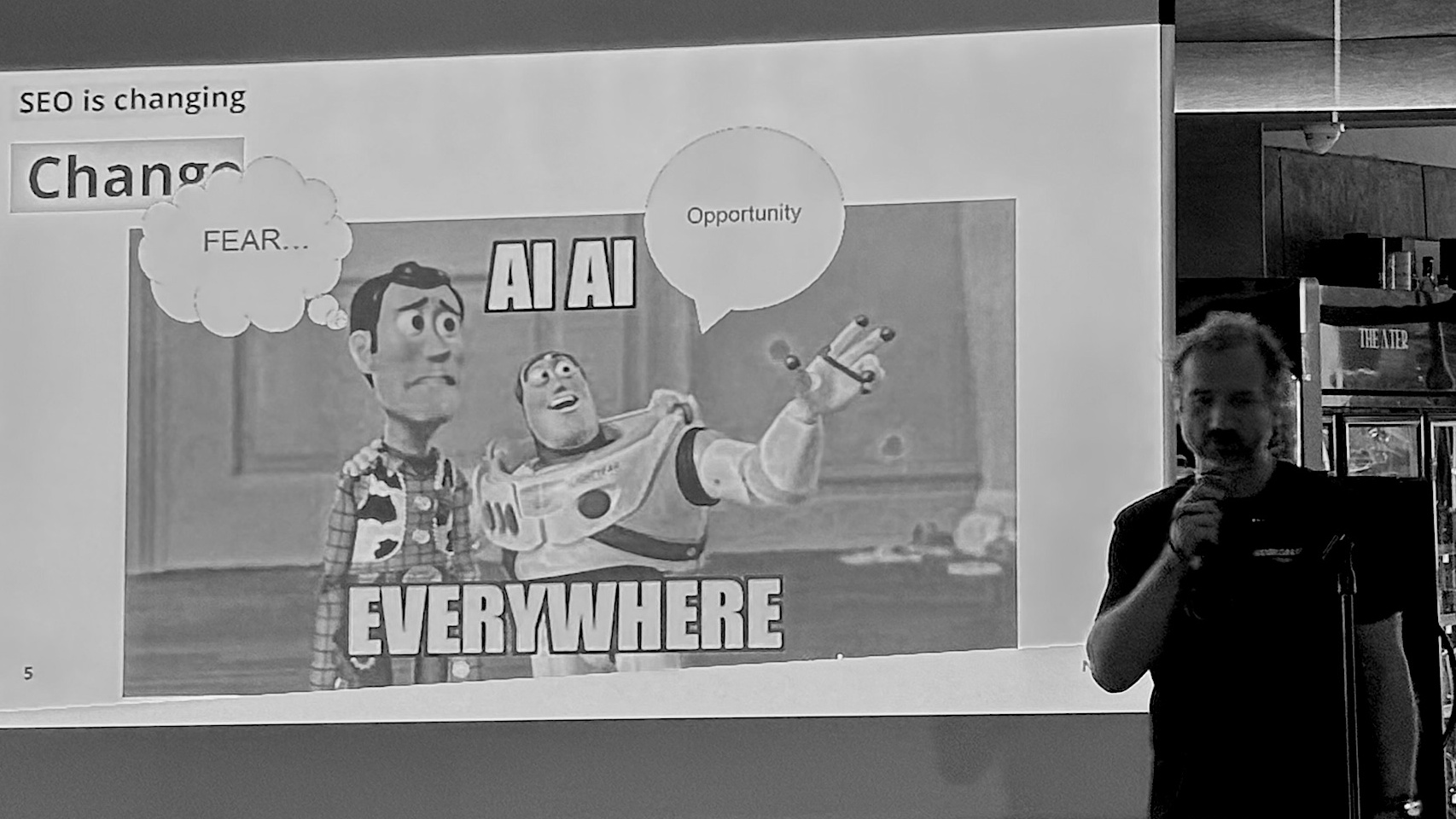
Paweł Sokołowski, Senior Content Editor, delivered a forward-looking presentation focused on aligning B2B content strategy with Google’s shift from ranking documents to utilizing Large Language Models (LLMs) that rank information chunks. The core message is that companies must adopt a defined AI strategy and optimize content for retrieval by AI systems like Google’s AI mode (Gemini), which is predicted to dominate the search assistant market against competitors like ChatGPT. Key takeaways emphasize the critical need to address AI hallucination risks (up to 37% in some models) and the organizational imperative to establish a formal AI adoption strategy.
Key Metrics and Market Dynamics
| Metric/System | Key Finding | Implication for B2B Content |
| Google Search Market Share | Near 100% dominance. | Content strategy must be Google-centric and serve the Gemini ecosystem. |
| ChatGPT Search Market Share | Currently 1-2%; projected 3-5% over 5-10 years. | High skepticism on long-term growth due to quality/data challenges. |
| ChatGPT Hallucination Rate | Approx. 37%. | Requires robust internal data quality and fact-checking processes for any AI implementation. |
| AI Response Error Rate | 45% of AI responses contain at least one meaningful error (per BBC-cited study). | High-risk areas (YMYL – Your Money, Your Life) require the strictest human oversight and safeguards. |
| Corporate AI Strategy | Most companies lack a defined strategy. | Adoption is often superficial and lacks clear measurement frameworks or ROI. |
Systems and Process Evolution
Google’s Shift to LLM-Based Answers
The fundamental change in search, traced back to the 2021 “Rethinking Search” research paper, involves moving from document ranking to answer generation using LLMs.
- Old Model: Ranking entire documents.
- New Model (AI Mode): Ranking chunks of information from various sources (websites, forums, YouTube, product feeds) to compile a comprehensive answer.
- Information Depth: Google’s AI Mode is superior, providing product views, producer information, buying options, user reviews, and cited sources.
Organizational AI Adoption Challenges
Companies face an “adoption paradox” characterized by three main issues:
- Rapid Pace of Change: Difficulty in keeping up with new models and features.
- Personal Level: Users only “scratch the surface” of AI tools, limiting workflow efficiency.
- Organizational Level: Hindered by legacy IT infrastructure, poor data quality, and cultural resistance to change.
The presentation stressed that content must be optimized for this chunk-ranking paradigm. NEURONwriter, according to the speaker, incorporates most of the content requirements outlined in the Rethinking Search document.
Actionable Takeaways
Develop an AI Content Strategy
- Prioritize Google-Centric Readiness: Design content for AI retrieval, summarization, and citation by Google’s LLMs (Gemini).
- Use Gemini Deep Research: As suggested by Paweł Sokołowski, attendees should use this powerful, free tool to draft a customized AI strategy based on their specific business descriptions and data.
- Define Success Metrics: Organizations must establish clear metrics to measure AI content performance, accuracy, reliability, and return on investment (ROI).
Content Optimization for AI Overviews
Content must meet quality dimensions similar to E-E-A-T to be selected by AI systems:
- Structure for Chunks: Structure content into verifiable chunks with clear headings and formatting.
- Source Transparency: Implement schema markup, use external citations, and provide author signals (e.g., author profiles, credible sources).
- Balance and Fairness: Create balanced, fair content that avoids hyperbole or absolute claims (e.g., avoid “we’re the best”).
- User-Centric Framing: Clearly frame benefits/risks to enhance credibility for sensitive topics.
Final Action Items
- Prepare a draft AI strategy for your business using Gemini Deep Research, supplying rich business context and product data.
- Implement best practices for chunk-optimized content, including author profiles, external citations, and schema markup.
- Get statrted with NEURONwriter an AI-powered content optimization tool that helps you plan, write, and SEO-optimize articles using NLP, competitor analysis, and semantic recommendations.