Tony Hill on Leveraging Pinterest as an Alternative Traffic Source
TL;DR: The Easy Summary The article discusses a presentation by Tony Hill on leveraging Pinterest as an alternative traffic source for websites that have experienced a decline in Google traffic. Tony, an experienced online publisher, shares insights into identifying suitable content for Pinterest, o
TL;DR: The Easy Summary
The article discusses a presentation by Tony Hill on leveraging Pinterest as an alternative traffic source for websites that have experienced a decline in Google traffic.
Tony, an experienced online publisher, shares insights into identifying suitable content for Pinterest, optimizing Pinterest accounts and boards, creating effective pins, utilizing Pinterest Trends for keyword research, and incorporating AI-generated images and content. Tony emphasizes targeting content towards women and inspiring specific actions like creating, buying, wearing, saying, visiting, or moving.
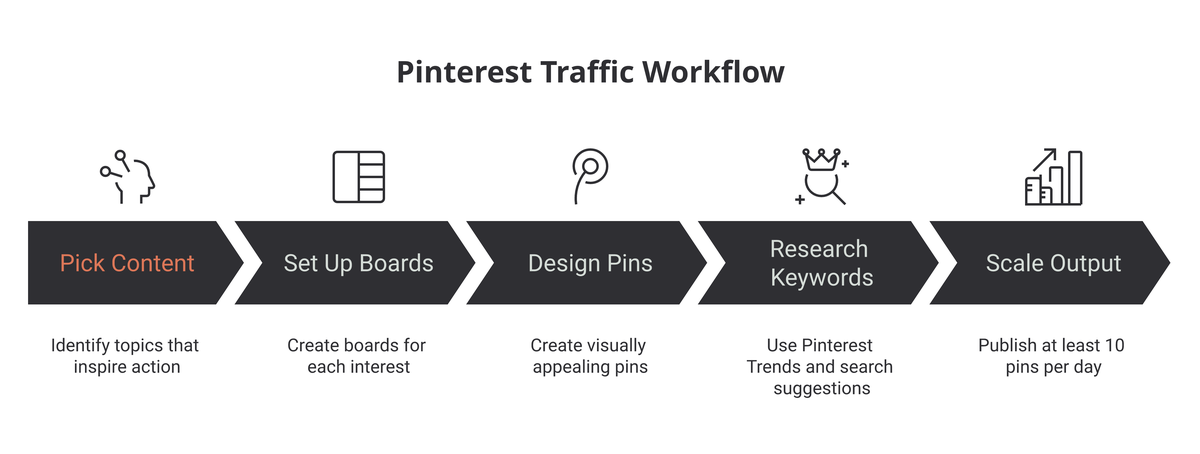
Key strategies include creating boards for each interest/topic, optimizing for the home feed and search results, using listicle titles and descriptive pin captions, and scaling pin creation to at least 10 per day. Tony also touches on the use of AI tools like Midjourney and ChatGPT for content creation and promotion. Overall, the presentation aims to provide a comprehensive guide for pivoting towards Pinterest as a traffic source.
Introduction and Background
Tony introduces himself as an experienced online publisher and explains the motivation behind exploring Pinterest as an alternative traffic source due to recent declines in Google traffic. He highlights the potential benefits of Pinterest, such as higher RPMs, a less volatile algorithm, and a need for content creators.
Identifying Suitable Content for Pinterest
Tony discusses the types of content that are more likely to perform well on Pinterest, focusing on topics that target women and inspire specific actions like creating, buying, wearing, saying, visiting, or moving. He provides examples of successful pins and suggests ways to adapt content for a female audience.
Setting Up Pinterest Accounts and Boards
Tony shares his approach to setting up Pinterest accounts, including creating multiple unclaimed accounts and converting them to business accounts. He also discusses his strategy for creating boards, emphasizing the importance of creating boards for each interest or topic and keeping board names simple and descriptive.
Creating Effective Pins
Tony discusses his preferred pin styles, including text overlays, collages, and pure images. He recommends analyzing search results and A/B testing with Pinterest ads to determine the most effective pin styles for specific topics. He also suggests using AI tools like Midjourney for generating visually appealing images.
Keyword Research and Optimization
Tony highlights the importance of keyword research and optimization for both the home feed and search results. He recommends using Pinterest Trends and the search suggestions feature to identify relevant keywords and targeting specific demographics through content optimization.
Scaling Pin Creation and Promotion
Tony emphasizes the importance of scaling pin creation to at least 10 pins per day and doubling down on high-performing boards and pins. He also discusses his new process for 2024, which involves leveraging AI tools like ChatGPT for content creation and optimization.
Closing Remarks and Future Course
Tony concludes by mentioning additional topics covered in his new Pinterest course, including ranking factors, ChatGPT prompts, pin generator tools, research tools, Midjourney tips, magnetic keywords, Notion for management, and optimizing for Pinterest psychology and website traffic.
My Take: What This Means for Solo Publishers
The key thing about Tony’s framework is that Pinterest isn’t social media — it’s a visual search engine with a buyer mindset. Pinterest users (578M monthly actives in 2026) are actively searching for solutions and products, not doom-scrolling. That’s a fundamentally different visitor than what you get from Facebook or TikTok, and it translates directly to higher RPMs and better affiliate conversion rates.
Pinterest has compounding returns. Unlike Facebook posts that die in 48 hours, a well-optimized pin can drive traffic for 2+ years. The editorial calendar math flips: you’re building an asset, not feeding a content treadmill. With Google traffic volatile and HCU recoveries still uncertain for many publishers, the pins you create today are insurance you’ll be glad you have in 12 months. This is exactly the diversification logic covered in Unique Organic Traffic Strategies: The Diversification Playbook — Pinterest fits neatly into a multi-channel traffic stack.
Start with your highest-RPM content, not everything. Identify your top 20% of posts by RPM and create Pinterest-optimized content around those first. If a tutorial earns $15 RPM from display ads, that’s your first Pinterest target — create 3–5 pin variants per post, not one. The same data-driven prioritization approach that works for content reoptimization applies here.
The female-audience framing isn’t optional — it’s the algorithm. Pinterest’s core user base is still 60%+ women. If your niche is male-dominated (technical, automotive, finance), you need to find the angle that bridges to female buyer intent. Not every site belongs on Pinterest — but if you’re in home, food, travel, photography, or lifestyle, you’re leaving money on the table. Compare this with the Flipboard traffic strategy: both platforms reward visual, evergreen content and have similar niche constraints.
AI-generated pins are now table stakes. Tony mentions Midjourney; in 2026 you can also use Gemini and ChatGPT image generation at much lower cost. The 10 pins/day target only becomes manageable with AI in your workflow. Without it, you’re looking at 2–3 hours daily just on pin creation — unsustainable for a solo publisher.
Pinterest isn’t a replacement for SEO. It’s a hedge. The same instinct behind Andy Skraga’s Facebook traffic play applies here — find where high-intent audiences are searching and meet them there. Build your Pinterest presence while your Google traffic is stable, not after it crashes. And check out Thomas Smith on Google Discover for a complementary free-traffic channel that pairs well with this approach.
Action Items
- Identify topics and content that target women and inspire specific actions like creating, buying, wearing, saying, visiting, or moving
- Set up multiple Pinterest accounts, convert them to business accounts, and create boards for each interest or topic
- Analyze search results and A/B test pin styles (text overlays, collages, pure images) to determine the most effective approach
- Utilize Tony’s PinClicks Tool (get a free trial here)
- Use Pinterest Trends and search suggestions for keyword research, targeting specific demographics
- Scale pin creation to at least 10 pins per day and double down on high-performing boards and pins
- Leverage AI tools like Midjourney for generating visually appealing images and ChatGPT for content creation and optimization
- Optimize pin titles, descriptions, and website content for the home feed and search results
- Consider enrolling in Tony’s Pinterest course for additional strategies and insights