Anne Moss’s Strategic Insights on Building Sustainable Engagement on Facebook
TL;DR: The Easy Summary Anne Moss discusses the importance of diversifying traffic sources for online businesses, particularly focusing on leveraging Facebook as a sustainable traffic source. She shared their experience and strategies for building an engaged community on Facebook pages, consistently

TL;DR: The Easy Summary
Anne Moss discusses the importance of diversifying traffic sources for online businesses, particularly focusing on leveraging Facebook as a sustainable traffic source. She shared their experience and strategies for building an engaged community on Facebook pages, consistently providing valuable content that resonates with the audience’s interests and pain points.
Anne emphasizes creating a consistent brand voice, interacting with the community, and experimenting to find the right tone and content that works. While acknowledging the potential for viral posts, she advocates for a long-term approach of nurturing the community and providing genuine value.
Anne also highlights the costs associated with building a Facebook page following through paid campaigns.
Overall, Anne presents Facebook as a viable alternative to Google for driving traffic to content websites, but notes that it requires patience, experimentation, and a deep understanding of the target audience.
Importance of diversifying traffic sources
Anne emphasizes the importance of not relying on a single source of traffic for online businesses, as it increases risk. She shares her experience of previously relying heavily on Google traffic until 2022, but recognizing the need to diversify and find their audience on other platforms like Facebook and Pinterest.
Sustainable Facebook traffic strategy
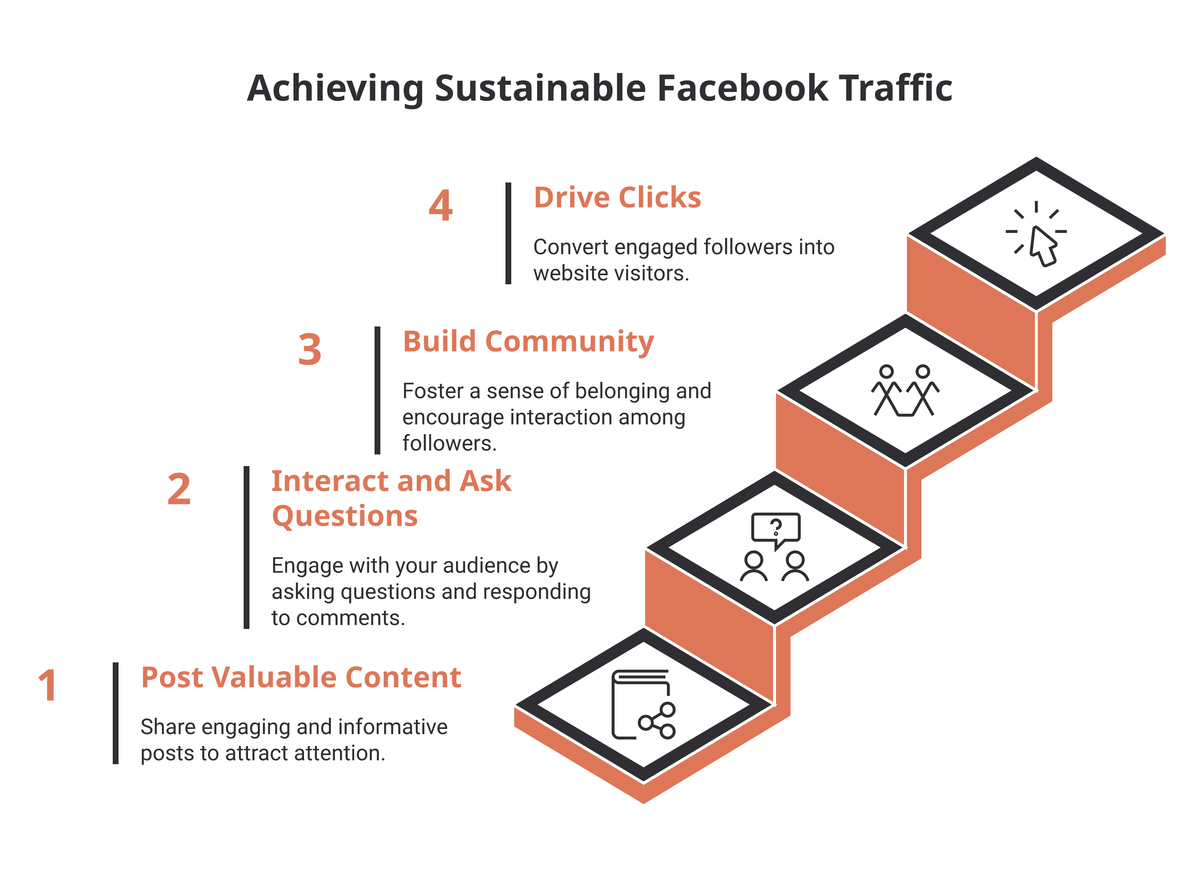
Anne presents their approach to generating sustainable traffic from Facebook, which involves consistently providing valuable content that resonates with the audience’s interests and pain points. This includes offering tips, insights, motivation, and uplifting quotes related to the website’s niche. The goal is to establish the brand as an expert in the niche and encourage clicks back to the website for more valuable content.
Building an engaged community on Facebook
Anne emphasizes the importance of building an engaged community around the Facebook page, rather than just using it as a billboard for content promotion. This involves interacting with the audience, asking questions, crowdsourcing information, and encouraging engagement through comments and shares. She also suggests delegating community management tasks to virtual assistants while ensuring they follow brand guidelines.
Viral posts and their limitations
While acknowledging the potential for viral posts on Facebook, Anne cautions against relying solely on this approach. Viral posts often attract low-quality traffic with high bounce rates and low RPMs (revenue per thousand impressions). Additionally, sensational or AI-generated content can damage the brand’s reputation and perceived value.
Considerations for implementing the Facebook strategy
Anne notes that the Facebook strategy works best for niches or topics that are community-oriented, where people define themselves by their interests or lifestyles. It requires patience and a slow growth approach, as building an engaged community takes time and experimentation. Additionally, the cost of acquiring followers through paid campaigns can be expensive, potentially making this strategy unsuitable for some publishers.
My Take: What This Means for Solo Publishers
Anne’s advice is solid, but it was recorded a couple of years ago. The Facebook landscape has shifted significantly since then — and some of what worked in 2022/23 plays out differently today.
The engagement numbers are brutal now. According to Socialinsider’s 2026 benchmarks, average organic engagement on Facebook sits at 0.15%. Link posts — exactly the format most publishers use to drive traffic — come in at just 0.05%. Anne’s community-first approach is a direct response to this reality: if you’re just posting links, you’re essentially invisible.
The Reels pivot is the biggest change Anne doesn’t cover. Since mid-2025, Facebook reclassified all video as Reels, and they now account for 54% of time spent on platform for users 35 and older. If your niche skews that demographic (and most content sites do), ignoring short-form video is leaving discovery reach on the table. Photos still outperform text by 35%, but Reels are now the primary growth lever for new audience reach.
For affiliate publishers specifically, here’s my read:
Do this: Follow Anne’s community-building playbook, but layer in 15–30 second Reels to grow reach beyond your existing followers. The algorithm now surfaces recommended content to non-followers in up to 50% of the feed — organic distribution that didn’t exist a few years ago. Andy Skraga built his half-million-dollar Facebook traffic operation on exactly this kind of non-follower reach.
Skip this: Paid follower acquisition unless you’re in a tight community niche with high RPMs. The math rarely works for affiliate content sites.
Don’t forget the bonus angle. If your Facebook page is getting traction, getting approved for the Facebook Bonus Program adds a direct monetization layer on top of ad revenue. Spencer Haws documented pulling $3,000 in a single month from it — not a full-time business, but real money for low incremental effort.
The traffic diversification play makes more sense now than ever. Google is increasingly volatile and AI Overviews are eating informational clicks. Facebook, done Anne’s way but updated with Reels, is one of the few platforms where organic reach is still genuinely achievable without a paid budget.
Action Items
Diversify traffic sources for online businesses to reduce risk and reliance on a single platform.
- Consistently provide valuable content on Facebook pages that resonates with the audience’s interests and pain points, such as tips, insights, motivation, and uplifting quotes related to the niche.
- Build an engaged community around the Facebook page by interacting with the audience, asking questions, crowdsourcing information, and encouraging engagement through comments and shares.
- Experiment with different types of content and tone to find what resonates best with the target audience, and continuously refine the approach based on performance metrics.
- Consider delegating community management tasks to virtual assistants while ensuring they follow brand guidelines and maintain a consistent brand voice.
- Evaluate the suitability of the Facebook strategy based on the niche or topic, considering factors such as community orientation and the potential for building an engaged following.
- Allocate resources for acquiring followers through paid campaigns on Facebook, as building a substantial following can be costly.