Robert Niechcial’s Insights on AI and SEO
Introduction In a groundbreaking presentation, Robert Niechcial shed light on the powerful intersection of Artificial Intelligence (AI) and Search Engine Optimization (SEO). He explored how AI, particularly language models like ChatGPT, is revolutionizing SEO practices and the search experience as a

Introduction
In a groundbreaking presentation, Robert Niechcial shed light on the powerful intersection of Artificial Intelligence (AI) and Search Engine Optimization (SEO). He explored how AI, particularly language models like ChatGPT, is revolutionizing SEO practices and the search experience as a whole. This blog post captures the essence of Robert’s talk, making it an engaging and insightful read for anyone interested in the future of SEO.
AI’s Transformative Potential for SEO
Robert kicked off his presentation by discussing AI’s transformative impact on SEO. He illustrated this with Google’s use of AI in optimizing flight paths to predict turbulence and avoid contrails. Furthermore, he highlighted AI’s capability in image processing, such as locating objects like ‘Wally’ from picture books, and its applications in predicting flight patterns. This set the stage for understanding how AI could extract key facts and details into knowledge graphs, revolutionizing content generation and optimization.
Leveraging AI for Content Planning, Generation, and Optimization
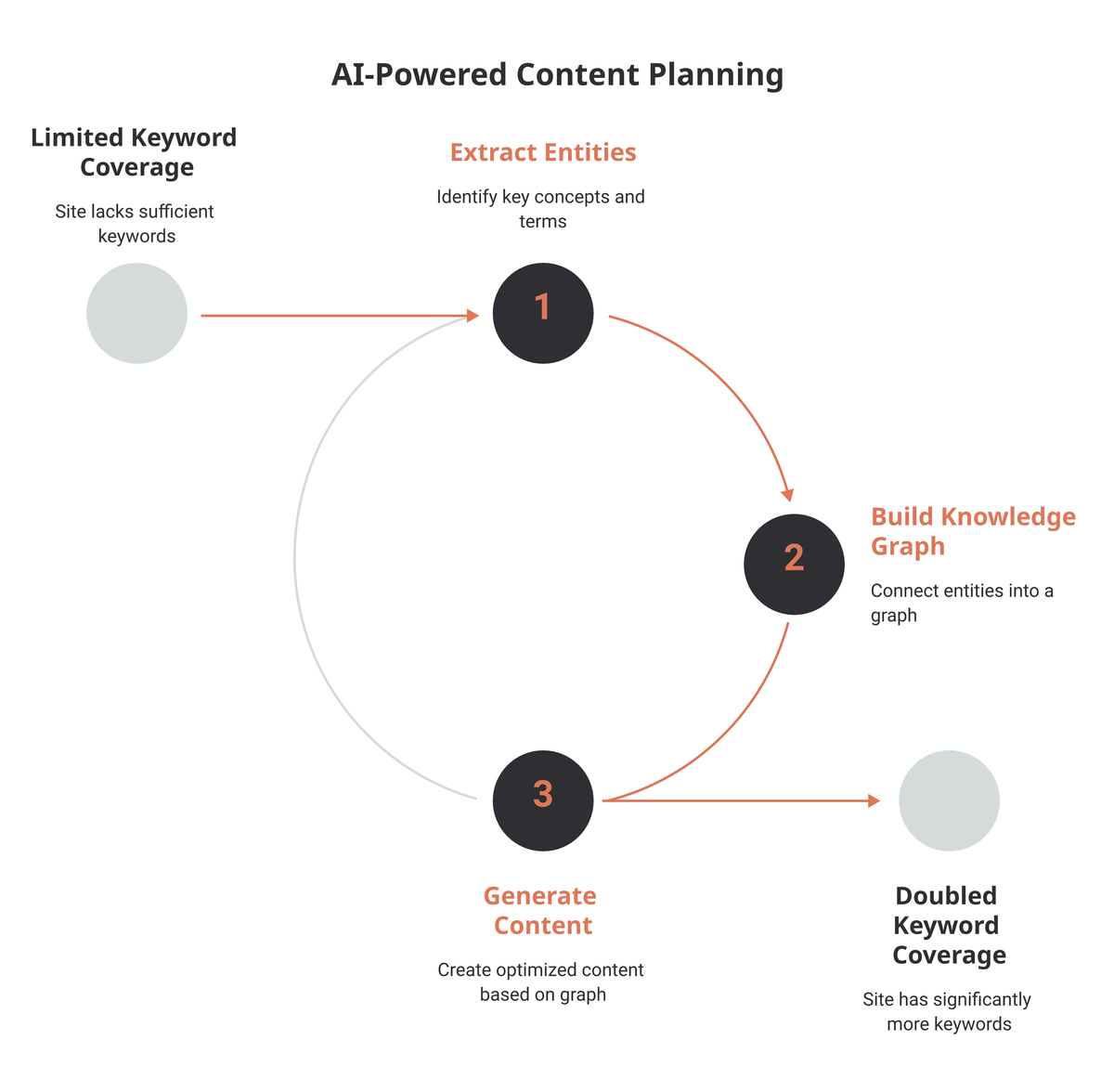
One of the most exciting parts of Robert’s presentation was his deep dive into using AI for content planning and generation in SEO. He provided concrete examples, showing how AI can extract relevant keywords and entities to form comprehensive knowledge graphs. These graphs can then be utilized to generate high-quality, effective content at scale. He also shared an inspiring case study where proper content optimization using knowledge graphs led to a website doubling its keywords and significantly increasing its traffic.
The Importance of Data Quality and a ‘Retrieve and Augment’ Approach
Robert stressed the importance of feeding AI with high-quality data to ensure accurate outputs. He introduced a ‘retrieve and augment’ strategy to minimize the risk of AI ‘hallucinations’ or factual inaccuracies. This approach involves using AI to retrieve existing relevant content and augment it when generating new text, enhancing the accuracy and reliability of the generated content.
Core Principles to Apply AI Effectively in SEO
Delving into the core principles of effectively using AI in SEO, Robert outlined three key focuses: distance, probability, and accuracy. Distance relates to both link building and content similarity, probability addresses the likelihood of improving rankings against competitors, and accuracy is crucial for reducing errors in AI-generated content. These principles guide a data-driven, engineering mindset for leveraging AI in SEO.
My Take: What This Means for Solo Publishers
Niechcial’s presentation reads differently now than when it was first delivered. The knowledge-graph approach he described is not a theoretical nice-to-have — it’s essentially how LLMs retrieve and surface content in 2026. The “retrieve and augment” strategy he outlined is RAG by another name, and being in the retrieval pool is now just as important as ranking on page one.
For a solo publisher running affiliate sites, here’s what actually matters from this talk:
Build topical depth, not topical breadth. The case study where a site doubled its keywords through knowledge-graph-driven content is the LLM-driven SEO playbook in action — comprehensive topical coverage at a granular level, not a spray of thin posts. If you’re still publishing one-off keyword articles without an entity cluster behind them, you’re leaving both Google rankings and AI citations on the table.
Structured data is now load-bearing. In 2026, schema markup isn’t just a rich-snippet play. It’s the primary signal that tells LLMs what your page is about, which entities it covers, and whether it belongs in a knowledge graph. The technical framework for LLM content optimization covers this in depth — if your affiliate posts lack Product, FAQPage, and HowTo schema, you’re invisible to AI Overviews.
The accuracy principle cuts both ways. Niechcial’s emphasis on data quality wasn’t just about AI hallucinations in generated content — it’s about your site’s own factual accuracy as a citation source. Google’s March 2026 core update rewarded original, verifiably accurate content significantly. The context density framework is the practical tool here: identify which entities and sub-topics your cluster pages are missing, and fill them systematically rather than publishing new standalone posts.
What to skip: don’t build knowledge graphs manually from scratch as a solo publisher — the time cost is brutal. Focus instead on adapting your existing content to AI search patterns: tighter entity signals, better internal linking, and structured data. A quick GEO audit of your own site will tell you which pages are already being cited by AI systems and which aren’t — that gap is where Niechcial’s principles apply most urgently.
Action Items for Harnessing AI in SEO
Based on Robert’s insights, here are actionable steps to harness the power of AI in SEO:
- AI Use Cases Research: Identify the top AI applications in your industry for content and SEO. Start with a list of 5 ideas to test.
- Knowledge Graph Development: Build knowledge graphs for your top 3 keyword topics to optimize pages and pinpoint content gaps.
- Implement ‘Retrieve and Augment’: Use this strategy for your next high-priority AI-generated content piece.
- Strategy Analysis: Examine your link building and content strategies through the lenses of distance, probability, and accuracy.
- Tracking and Monitoring: Establish a system to track the business impact of AI-driven SEO initiatives over the next 6 months.
Conclusion
Robert Niechcial’s presentation offers invaluable insights into the evolving world of SEO in the age of AI. By understanding and applying these principles, businesses and SEO professionals can significantly enhance their digital strategies, ensuring they stay ahead in the ever-changing landscape of search engine optimization.
Sources: Robert Niechcial’s presentation on AI and SEO (CMSEO). Related reading on RankingHacks: LLM-Driven SEO, Context Density Framework, GEO Audit.