Kyle Roof’s SEO Revelations: Mastering Google’s Algorithm
Kyle Roof, a renowned SEO expert, recently shared his extensive experience and insights from years of testing Google’s search algorithm. In his presentation in Chiang Mai, Thailand, Roof provided a fascinating overview of his unique testing methodologies, key findings, and practical strategies for S

Kyle Roof, a renowned SEO expert, recently shared his extensive experience and insights from years of testing Google’s search algorithm.
In his presentation in Chiang Mai, Thailand, Roof provided a fascinating overview of his unique testing methodologies, key findings, and practical strategies for SEO success.
Early On-Page Factor Testing
In his initial foray into SEO testing back in 2015, Roof embarked on experiments that examined the impact of various on-page factors such as headings, hidden content, and text readability. His findings were eye-opening:
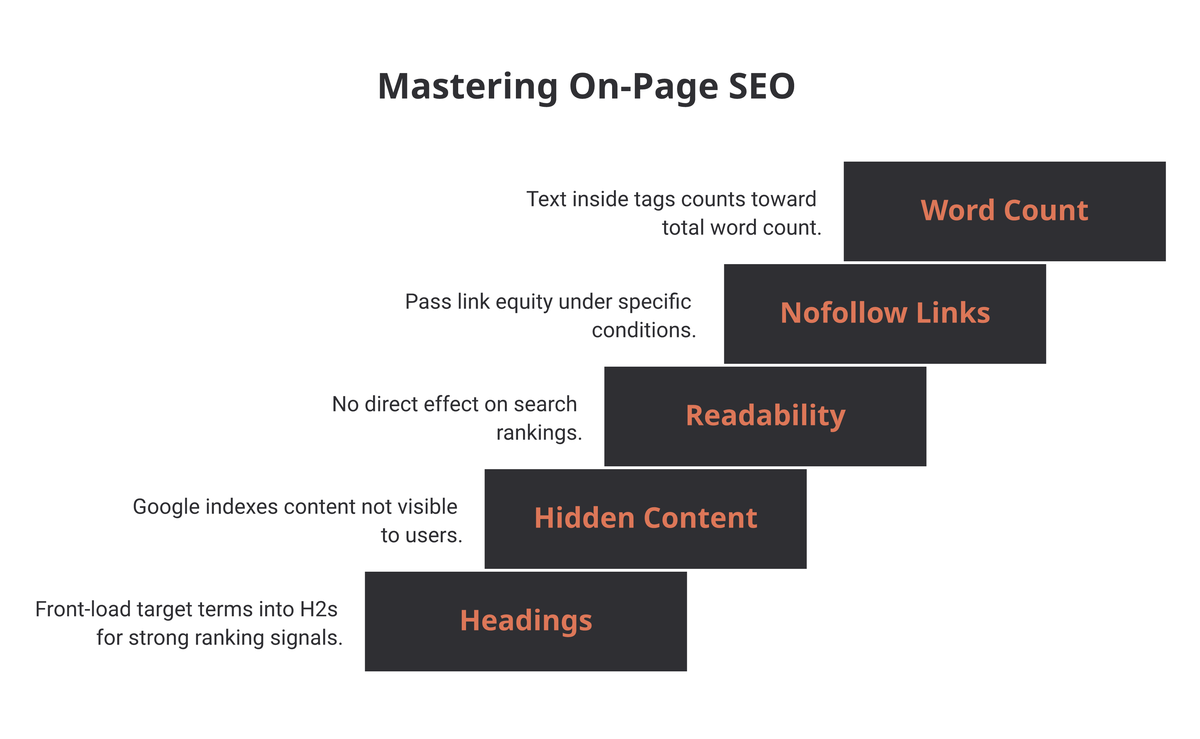
- Headings: They play a significant role in boosting a page’s ranking in search results.
- Hidden Content: Contrary to popular belief, Google does index content that isn’t immediately visible to users.
- Text Readability: Surprisingly, the readability of text doesn’t have a direct influence on search rankings.
The Rhinoplasty Case Study
Roof’s 2018 case study, dubbed ‘Rhinoplasty’, was a pivotal moment in SEO testing. He successfully ranked pages filled with nonsensical ‘lorem ipsum’ text, fundamentally demonstrating that SEO is more about aligning with Google’s algorithmic calculations than about creating high-quality content for human readers. This experiment also highlighted Google’s capability to impose manual penalties on sites that breach its guidelines.
Recent Tests on Key Ranking Factors
Roof didn’t stop there. His recent tests delved into the effects of nofollow links, Google Ads, and the significance of word count in HTML tags:
- Nofollow Links: Contrary to common beliefs, these can transfer ‘link juice’ under specific conditions.
- Google Ads: Placing ads can help ‘unstick’ pages that aren’t moving up in rankings.
- Word Count in HTML Tags: Text within tags like
<option>is counted towards the overall word count, influencing SEO.
The Search Algorithm’s Stability
Amidst the SEO community’s focus on the latest updates, Roof’s research shows that the core components of Google’s search algorithm have remained remarkably stable over the years. He was able to replicate tests from 2015 with similar results in the present day, suggesting that most updates are incremental rather than revolutionary.
Responding to Algorithm Hits
Roof advises a targeted approach when dealing with the impact of algorithm updates. Instead of making broad site-wide changes, he recommends identifying the most affected pages using Google’s Search Console and addressing those specifically.
Learning from Competitors
One of Roof’s key strategies involves learning from competitors. By analyzing and understanding how competitors have tackled similar ranking challenges, one can develop more effective SEO strategies. Roof emphasizes the importance of combining these insights with direct testing for optimal results.
My Take: What This Means for Solo Publishers
I’ve been running affiliate sites for years, and Kyle Roof’s testing methodology is one of the few things in SEO I actually trust. Not because it confirms what I want to hear — but because it’s based on controlled experiments, not correlation studies or Google’s own PR.
The single most important takeaway from his work: the algorithm’s core hasn’t changed that much since 2015. Roof has replicated his early tests with near-identical results today. This matters because the SEO industry survives on panic — every core update triggers a wave of “everything you knew is wrong” content. Roof’s data says otherwise. The fundamentals are the fundamentals.
What does this mean practically? If your pages aren’t ranking, it’s almost certainly a headings structure problem, a keyword density issue, or weak topical relevance — not some mysterious new signal everyone’s speculating about. Roof’s 2025 research (presented at CMSEO) confirms that even in the AI era, on-page optimization fundamentals remain the dominant factor. AI is a layer on top, not a replacement for the underlying mechanics.
Three things from Roof’s research I’ve actually implemented on my own affiliate sites:
- Headings as ranking signals: I used to treat H2s as UX scaffolding. Wrong. They’re signals. I now front-load target terms into H2s deliberately — not keyword stuffing, just intentional placement. Works.
- Nofollow link juice: The finding that nofollow links can pass equity under certain conditions is underrated. It changes how I think about internal linking structure. Pair this with the logic-first testing approach Roof outlined at CMSEO 2024 and you have an actual framework for diagnosing underperforming pages.
- Word count in HTML tags: This one’s sneaky. If you use dropdowns, select menus, or tabbed content, the text inside those elements counts toward word count. It’s a dead-simple way to add topical density without bloating the visible content.
What to ignore: the advice to “run Google Ads to unstick pages.” Maybe it works in a controlled test environment. But for a solo publisher running Amazon affiliate content, the economics don’t hold — you’re not going to pay for clicks to pages that earn $0.04 per visitor. Focus instead on understanding the actual ranking mechanisms and fixing the on-page signals first.
The competitor analysis point is genuinely useful though. When a page stalls, I don’t guess anymore — I open PageOptimizer Pro, compare my top-ranking competitors’ H-tag structure and term frequency, and close the gap. It’s not glamorous, but it’s what data-driven SEO actually looks like in practice. The systematic reoptimization approach pairs perfectly with Roof’s methodology: identify which pages Google is evaluating, compare against ranking competitors, patch the specific gaps. Repeat.
Action Items for SEO Success
Based on Roof’s insights, here are some actionable steps for anyone looking to enhance their SEO strategy:
- Competitor Analysis: Research competitors ranking well for your targeted keywords to understand their on-page and linking strategies.
- Build a Testing Plan: Develop a plan to test and validate assumptions about your site’s SEO priorities.
- Data Segmentation: Use Google’s Search Console to segment data by page and identify underperformers.
- SEO Tools Utilization: Employ tools like PageOptimizer Pro and Screaming Frog for in-depth analysis of competitors’ on-page factors.
- Strategic Brainstorming: Schedule sessions to hypothesize improvements to site content and technical SEO aspects.
- HTML Tag Optimization Tests: Implement and monitor optimization tests on less critical pages.
- Invest in SEO Testing Protocols: Allocate resources for developing comprehensive SEO testing protocols and tools.
- Content Strategy Alignment: Adjust your content strategy to align more closely with Google’s preferences, as suggested by Roof’s findings.
- Team Engagement: Engage with your SEO team to identify key ranking factor assumptions that need testing.
- Documentation and Training: Keep a record of all testing results for future reference and training purposes.
Conclusion
Kyle Roof’s insights offer a treasure trove of insights for anyone keen on mastering SEO. By understanding and applying these principles, you can significantly enhance your website’s search engine performance, ensuring it not only meets but exceeds Google’s evolving standards.