Mastering Low Fruits for Effective Keyword Research
Introduction Jared Bauman’s YouTube tutorial provides a comprehensive guide on using the Low Fruits keyword research tool, a valuable asset for enhancing SEO strategies. This blog post aims to enhance the readability of his tutorial, outlining key techniques for effectively utilizing this tool to id

Introduction
Jared Bauman’s YouTube tutorial provides a comprehensive guide on using the Low Fruits keyword research tool, a valuable asset for enhancing SEO strategies. This blog post aims to enhance the readability of his tutorial, outlining key techniques for effectively utilizing this tool to identify low competition keywords and build topical authority.
Getting Started with Low Fruits
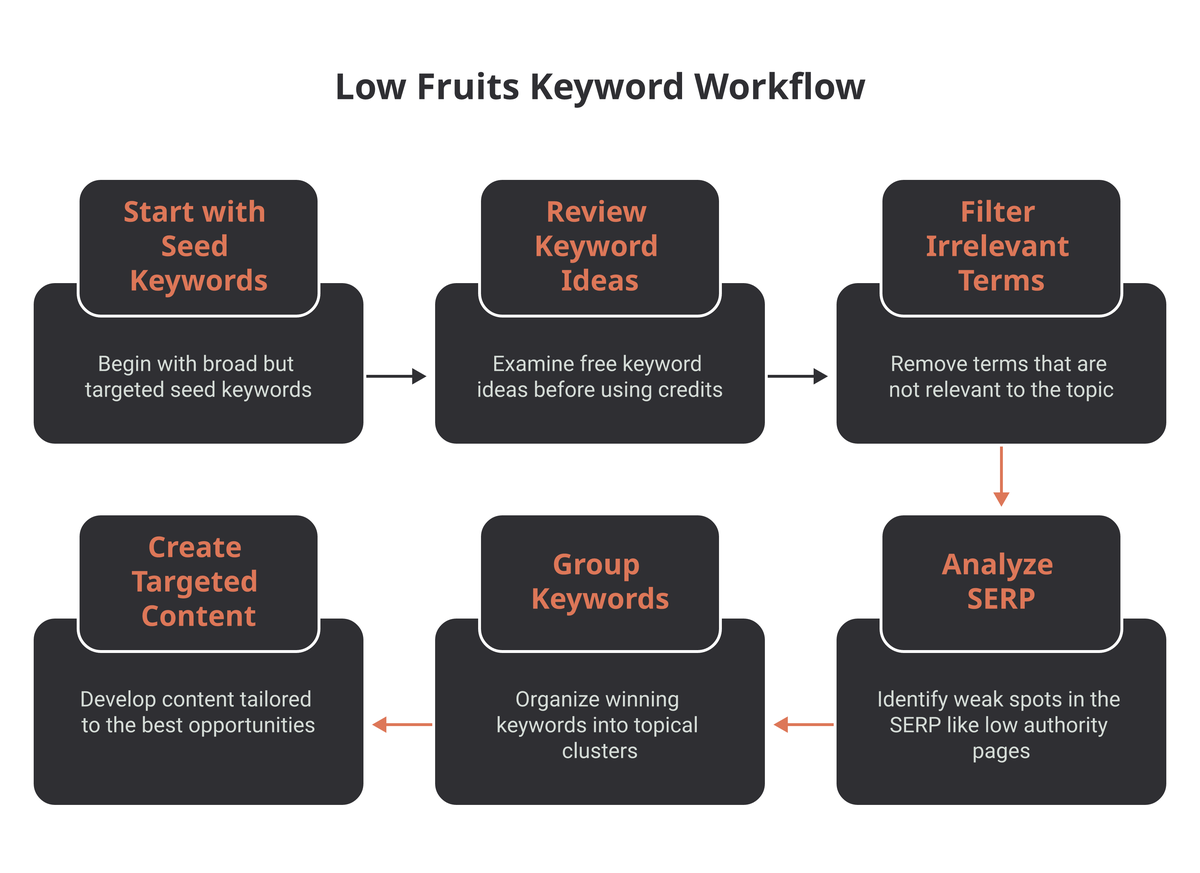
The tutorial begins with an introduction to Low Fruits, highlighting its user-friendly interface. Key features include the keyword finder, importing keywords, generating reports, and managing lists. The settings section allows users to manage website URLs, credits, and account details.
Utilizing the Keyword Finder
Bauman emphasizes the importance of using seed keywords that are broad yet targeted. The tool offers free keyword ideas, allowing users to gauge potential before using credits for a more detailed analysis. Filtering irrelevant keywords and checking your site’s rankings are essential steps in refining search results and focusing on valuable opportunities.
Analyzing Keyword Opportunities
A crucial aspect of Low Fruits is its SERP analysis feature. It displays keyword volumes, word counts, weak spots (such as low DA sites ranking), and your site’s current position. This detailed analysis aids in identifying low competition, long-tail keywords suitable for targeting and optimizing existing site content.
Importing Keywords from Other Tools
Bauman also covers the tool’s import feature, which allows users to bring in keywords from other sources like Ahrefs. This integration provides a broader scope of opportunities and consolidates various data sources for more comprehensive insights.
My Take: What This Means for Solo Publishers
LowFruits solves the exact problem that kills most solo publishers doing keyword research: the big tools give you data, but not winnability signals. Finding a keyword with 1,000 searches/month means nothing if all 10 results are DR80+ publications. What matters is whether a single-person site — DA20-40 — can actually land on page one. Before committing to a term, run the current top results through a free website authority checker to see whether the page one you would be fighting is really DR80 or just looks intimidating.
That’s what the “weak spots” feature is actually showing you. When you see a Forbes listicle or a low-quality forum post sitting in position 4, that’s not just interesting — it’s an invitation. Google is telling you it couldn’t find a better answer. Those gaps are where you build content.
A few things that actually work for affiliate sites in practice:
Use Ahrefs to generate the seed list, then validate with LowFruits. As covered in Mastering Ahrefs for Increased Website Traffic and Ranking, Ahrefs is better for discovering the universe of keywords around a topic. LowFruits is better for telling you which ones you can actually win. Use them together, not in isolation.
Stop using monthly search volume as your primary filter. A keyword with 200 searches/month where you have a realistic shot at #2 is worth more than 2,000 searches/month where you’re fighting DR80 sites. Data-driven SEO with 12+ years of content strategy behind it consistently shows the same thing: optimize for traffic probability, not traffic potential. Steve Toth’s spreadsheet-driven keyword discovery and competitor-tracking workflow is a good companion for surfacing those low-competition terms in the first place — same instinct, applied one step earlier in the process.
Cluster before you create. Grouping keywords into topical clusters before writing a single post is the most important step Bauman covers. It’s not busywork — it’s how you build topical authority systematically. Logic-and-testing approaches to SEO confirm that topical clusters outperform individual posts for ranking velocity, especially on smaller sites.
If your site is under DA30, ignore volume entirely for new content. Target 0-100 monthly search terms with visible weak spots. Thirty posts hitting these terms will outperform five posts targeting 500+ volume keywords where you never crack page two. Google’s ranking mechanisms increasingly reward topical depth — you build that foundation with low-volume clusters first, then move up.
What to skip: don’t burn credits indiscriminately. Run the free keyword pass first and only spend credits where you already see at least one weak spot signal in the free results. There’s no reason to pay to validate what you can disqualify for free.
Action Items for Leveraging Low Fruits
Based on Bauman’s tutorial, here are actionable steps for optimizing your SEO strategy:
- Explore Low Fruits: Test the tool using the provided affiliate link to familiarize yourself with its functionalities.
- Start with Broad Seed Keywords: Choose seed keywords related to your content focus that are broad yet targeted.
- Analyze Free Keyword Ideas: Review the free keyword suggestions before using credits for more in-depth analysis.
- Filter Out Irrelevant Keywords: Refine your search by eliminating keywords that don’t align with your content objectives.
- Identify Low Competition Keywords: Analyze the keywords to find those with low competition, ideal for targeting.
- Check Site Rankings: Assess which content on your site is already performing well in search rankings.
- Target Long-Tail Keywords: Focus on low competition long-tail keywords for creating new content.
- Import Keywords from Other Tools: Use the import feature to bring in keywords from external sources like Ahrefs.
- Aggregate Keyword Data: Combine the gathered keyword data into a single spreadsheet for thorough analysis.
- Group Keywords into Clusters: Sort, de-duplicate, and organize keywords into topical clusters.
- Prioritize and Create Targeted Content: Focus on prioritized keywords to create content that capitalizes on identified opportunities.
Conclusion
Jared Bauman’s tutorial on Low Fruits offers invaluable insights into conducting effective keyword research. By following these strategies, SEO professionals and content creators can efficiently identify and target low competition keywords, optimize their content strategy, and enhance their website’s search performance.

Watch “LowFruits Keyword Research” on YouTube