
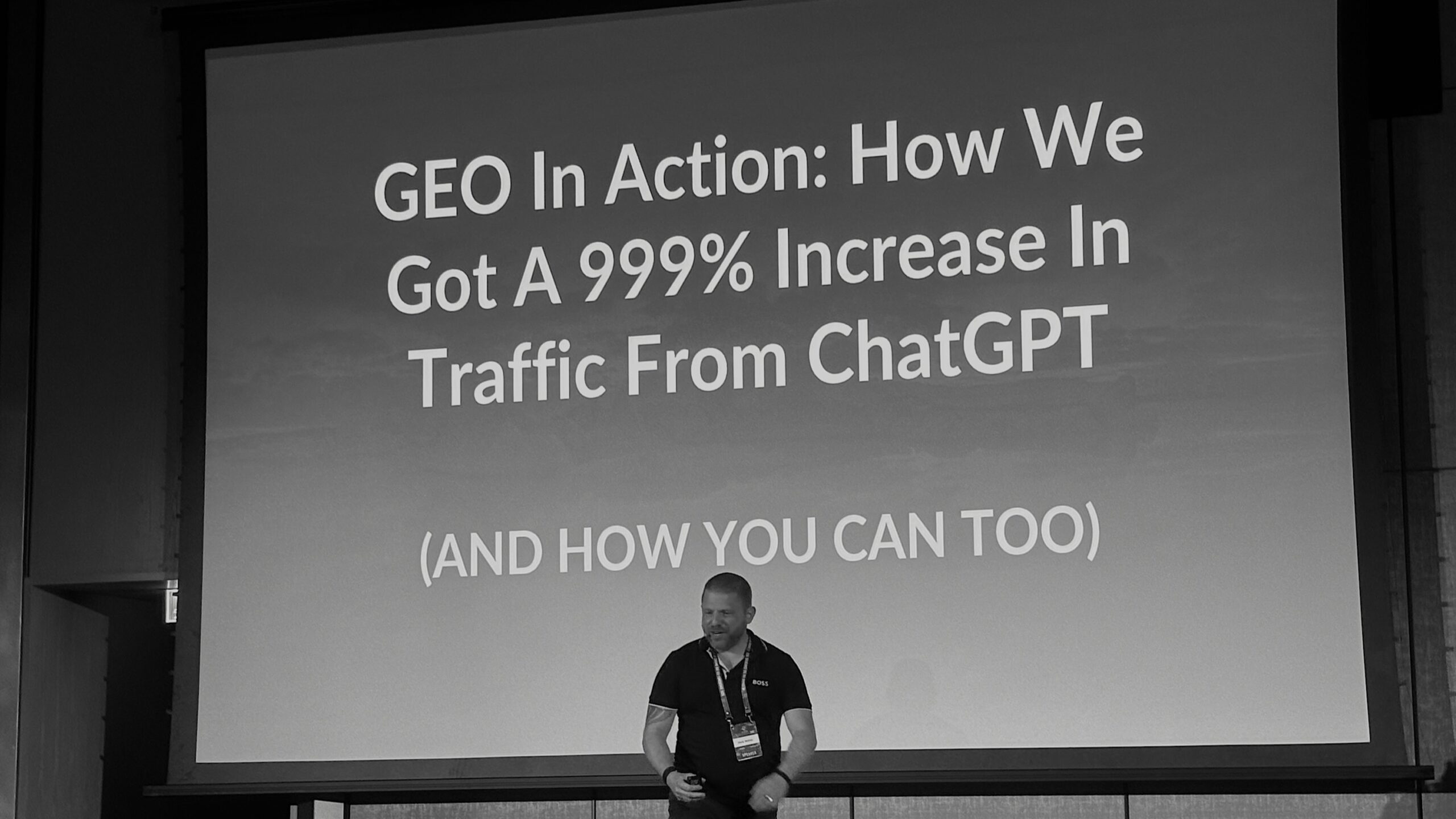
The New SEO Frontier: Influencing ChatGPT
Summary
This presentation, led by Chris M. Walker, detailed practical strategies for optimizing content to rank within Large Language Models (LLMs) like ChatGPT. Initially skeptical, the founder of Legiit began noticing significant referral traffic from these platforms and developed a systematic approach to influence LLM recommendations. The core strategy revolves around understanding the specific search patterns of AI chatbots, creating optimized content formats, and establishing a consistent, authoritative brand presence across the web. This optimization strategy resulted in a 999% increase in referral traffic from ChatGPT.
How LLMs Search and Source Information
The key to the strategy is “watching the AI think.” The speaker demonstrated that when an LLM is asked a query (e.g., “best website to buy backlinks”), it reveals a combination of search actions, which informs the content strategy:
- Broad Terms: Searching for generic, high-level queries (e.g., “best backlink marketplaces 2025”).
- Branded Terms: Looking for specific company reviews and pricing pages.
- Data Checks: Performing site searches and traffic checks on potential sources.
Key Platforms Referenced by LLMs
LLMs frequently cite information from specific channels. Optimizing presence on these platforms is essential for visibility:
- Forums: Reddit and niche industry forums.
- “Parasites”: High-authority platforms like YouTube, Medium, and LinkedIn.
- Review Sites: Platforms such as TrustPilot.
- Brand-Owned Properties: Company websites and, significantly, support desk articles (e.g., Zendesk, Intercom), which are highly trusted by bots for factual Q&A.
Optimal Content Types and Strategy
To generate citations and traffic from LLMs, certain content formats perform exceptionally well:
Winning Content Formats
| Content Type | Strategy |
| Listicles | “Top X Products” or “Best of [Current Year]” compilations. |
| Comparison Pages | “X versus Y” format. The speaker suggested a hack: compare methodologies or concepts (e.g., “PBNs vs. guest posts vs. niche edits”) instead of only direct competitors. |
| Q&A Content | Direct answers to questions on forums and support desks. |
Canonical Source of Truth
The speaker discovered that LLMs often misstate facts about a brand. The solution is to create a definitive, structured source of information:
- Dedicated Page: Publish a specific page (150–300 words) on the company site (e.g.,
/what-is-our-brand) containing factual information, core features, launch year, and an FAQ. - Consistent Phrasing: Use near-verbatim wording for the brand description across this page and all external entities.
Entity Building and Experimentation
- Branded Profiles: Build out profiles on platforms like Wikidata, social media, review sites, and forums, all using the consistent canonical phrasing. For videos, the surrounding title and description text is crucial, as LLMs cannot interpret the video content itself.
- RLHF Experimentation: The team experimented with Reinforcement Learning from Human Feedback (RLHF) by providing feedback to ChatGPT when the brand was omitted, suggesting it be included. This showed potential, though inconsistent, results for influencing future responses.
Results and Implementation Tools
Traffic Impact
The optimization strategy yielded impressive results:
- Traffic Volume: 10,683 visitors referred directly from ChatGPT year-to-date.
- Growth: A 999% increase in ChatGPT referral traffic.
- Referral Rank: ChatGPT became the third-highest direct referral source, following only Google and Facebook.
- Conversion Potential: The traffic included visits to commercial and transactional pages, suggesting a positive sales impact.