Steve Toth's SEO Notebook: 7 Quick Wins + AI Workflows
Introduction Steve Toth, a seasoned SEO expert with a rich background as the former SEO manager at FreshBooks and founder of Canada’s largest SEO conference, shared invaluable insights in his presentation. This blog post summarizes his talk, focusing on his top SEO notebook tips, effective use of sp

Introduction
Steve Toth, a seasoned SEO expert with a rich background as the former SEO manager at FreshBooks and founder of Canada’s largest SEO conference, shared invaluable insights in his presentation. This blog post summarizes his talk, focusing on his top SEO notebook tips, effective use of spreadsheets, AI applications, and recent developments in SEO.
7 Spreadsheet Quick Wins
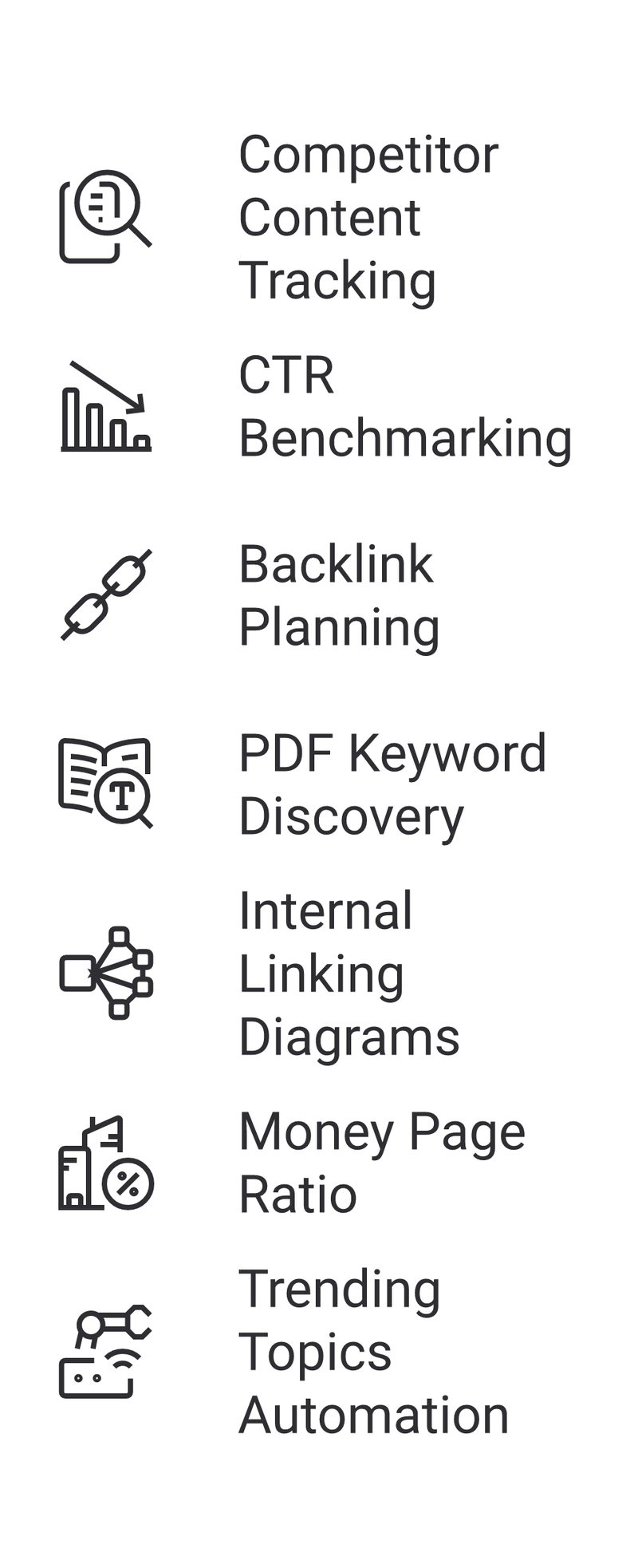
Toth detailed seven practical spreadsheet techniques for SEO success:
- Competitor Content Tracking: Keep tabs on what your competitors are publishing.
- CTR Benchmarking: Analyze and improve your click-through rates.
- Backlink Planning: Strategize your backlink acquisition efforts.
- Identifying PDF Keywords: Discover keyword opportunities in PDF documents.
- Internal Linking Diagrams: Visualize and improve your site’s internal linking structure.
- Money Page Ratio Calculation: Balance your informational and transactional content.
- Trending Topics Automation: Stay ahead by automating content on trending topics.
Favorite AI Notes
Toth explored various AI use cases that can revolutionize SEO practices:
- Creating Bookmarklets with ChatGPT: Automate tasks like copying SERP keywords and retrieving archived pages.
- Improving Dwell Time: Use AI to enhance user engagement on your site.
- Analyzing Ranking Factors: Dig deep into factors that influence search rankings.
- Generating Unique Titles: Use AI to create catchy, click-worthy titles.
- Fact Checking and Summarizing: Leverage AI for accurate and concise content.
- Training Writers with AI: Enhance the skills of your content team using AI tools.
Turning ‘People Also Ask’ into High-Traffic Pages
Toth outlined a strategy to transform ‘People Also Ask’ questions into a goldmine of high-traffic content by clustering them into relevant topics.
G-Score Missing Keyword Report
Introducing his G-Score report, Toth demonstrated how to integrate and prioritize missing keywords from Google’s Search Console, a vital step for optimizing content strategy.
Content Conductor Outline Generator
Toth showcased the Content Conductor, an innovative tool for creating content outlines. This tool combines SERP analysis and ChatGPT, developed in collaboration with an ex-Googler, to streamline content creation.
My Take: What This Means for Solo Publishers
Toth’s original presentation was ahead of its time — most of what he outlined as “AI integration” has since become the minimum table stakes for staying visible in search. His agency Notebook Agency has since pivoted hard to what he now calls AEO (Answer Engine Optimization), and the framing shift matters: we’re no longer just accelerating traditional ranking strategies with AI tools, we’re building for AI visibility directly.
For solo affiliate publishers, here’s what I’d actually do with this material in 2026:
The G-Score missing keywords angle is still the highest-ROI move. Finding the gap between what you rank for and what Google could be showing you is exactly what the context density SEO framework is built around — Toth was early to this thinking. Run it, fix it, then repeat monthly.
“People Also Ask” clustering has evolved into fan-out query strategy. What Toth described as turning PAA questions into high-traffic pages is now about understanding the themes AI structures queries around: comparisons, pricing, use cases, and buyer profiles. Instead of targeting every possible PAA variant, cover those four dimensions well and you’ll catch both traditional and LLM-driven traffic. Adapting to AI search breaks down exactly how to restructure content around these themes.
Use Bing Webmaster Tools alongside Google Search Console. Toth recently noted that Bing’s data surfaces 30–40% of queries that Google hides — that’s a free keyword gap tool most solo publishers ignore entirely. A free Bing keyword tool pulls those same alternate-engine phrases straight, without opening Webmaster Tools. Pair it with the LLM-driven SEO framework to prioritize which of those queries actually drive AI citation and referral traffic.
The ChatGPT bookmarklets tip aged well — the AI content guidance aged poorly. Using AI for fact-checking and title generation is table stakes now. The real question in 2026 is whether your content is structured for AI chatbot citation, not just blue-link results. Google’s own API leak confirmed how heavily engagement signals and entity recognition factor in — build for that layer, not just keyword density.
Skip the spreadsheet quick wins if you’re a one-person operation — they’re built for agency workflows with multiple clients. Focus your time on topical coverage depth and AEO signals instead.
Action Items for Enhancing SEO Strategy
To implement Toth’s insights, here are the key action items:
- Competitor Content Analysis: Use a tracking spreadsheet to monitor competitors’ content updates.
- ChatGPT Prompt Testing: Experiment with ChatGPT for article summarization, fact-checking, and writer training.
- Develop Content Clusters: Brainstorm middle-funnel ‘People Also Ask’ questions for topic clusters.
- Set Up G-Score Report: Prioritize missing keywords from Search Console using the G-Score report.
- Explore Content Conductor: Automate content outlines based on SERP analysis.
- Monitor Keyword Trends: Stay ahead of competitors with trending topic automation.
- Increase On-Site Time: Implement strategies like compelling intros to enhance user engagement.
- Analyze Money Page Ratio: Balance informational and transactional content effectively.
- Use AI for Title Generation: Craft engaging titles with unique angles for improved CTR.
- Review SEO Notebook Tips: Schedule time to go through all notebook tips and apply relevant ones.
Conclusion
Steve Toth’s presentation offers a treasure trove of strategies for anyone looking to elevate their SEO game. By incorporating these techniques and AI applications, SEO professionals can significantly enhance their website’s visibility, traffic, and overall performance in the digital space.
Frequently Asked Questions
Who is Steve Toth?
Steve Toth is a seasoned SEO expert and the former SEO manager at FreshBooks. He founded Canada’s largest SEO conference and his agency, Notebook Agency, has since pivoted toward what he now calls AEO (Answer Engine Optimization). His presentation covered SEO notebook tips, spreadsheet techniques, and practical AI applications for search.
What are Steve Toth’s seven spreadsheet quick wins for SEO?
Steve Toth’s seven spreadsheet quick wins are competitor content tracking, CTR benchmarking, backlink planning, identifying PDF keywords, internal linking diagrams, money page ratio calculation, and trending topics automation. These techniques are built for agency workflows managing multiple clients. For a one-person operation, this post suggests skipping them and focusing on topical coverage depth instead.
How does Steve Toth use AI in his SEO workflow?
Steve Toth uses AI for several practical tasks, including creating ChatGPT bookmarklets to automate copying SERP keywords and retrieving archived pages, improving dwell time, analyzing ranking factors, generating unique titles, fact-checking and summarizing content, and training writers. His Content Conductor tool also combines SERP analysis with ChatGPT to generate content outlines.
How do Steve Toth’s strategies apply to AI search and GEO?
Steve Toth’s work points toward Answer Engine Optimization: his agency has pivoted to AEO, shifting from accelerating traditional ranking with AI tools to building for AI visibility directly. This post argues his “People Also Ask” clustering has evolved into fan-out query strategy — covering comparisons, pricing, use cases, and buyer profiles to catch both traditional and LLM-driven traffic.