Flipboard Traffic Strategies: Michael Dinich’s Guide to Boosting Website Visibility
TL;DR: The Easy Summary Michael Dinich discusses the benefits of using Flipboard, a social media platform, to drive traffic to websites. It provides a comprehensive overview of setting up a Flipboard profile, creating and managing magazines, joining group magazines, sharing content effectively, and

TL;DR: The Easy Summary
Michael Dinich discusses the benefits of using Flipboard, a social media platform, to drive traffic to websites. It provides a comprehensive overview of setting up a Flipboard profile, creating and managing magazines, joining group magazines, sharing content effectively, and leveraging advanced strategies to maximize traffic from Flipboard. Key points include:
-
Flipboard is a blog and publisher-friendly social media platform where users curate and share articles, videos, and other content.
-
Setting up a Flipboard profile is straightforward, and users can create multiple magazines to organize and share content.
-
Joining group magazines and inviting contributors is crucial for building a community, increasing followers, and driving traffic.
-
Effective content sharing involves posting engaging headlines, visually appealing images, and a mix of original and curated content.
-
Analytics are available for publishers, but a significant portion of traffic comes from the user’s profile rather than individual magazines.
-
It typically takes 6-7 months of consistent effort to start seeing sizable traffic from Flipboard.
-
Strategies like cloning and syndicating content, joining relevant niche communities, and cross-promoting can help maximize Flipboard’s traffic potential.
The presentation emphasizes the importance of being an active and courteous community member, sharing others’ content, and not solely promoting one’s own content. It positions Flipboard as a valuable traffic source independent of Google’s algorithms and encourages bloggers to leverage this platform.
Introduction to Flipboard
Flipboard is introduced as a social media app similar to Pinterest, where users curate and share news articles, blog posts, videos, and other content. It is described as blog and publisher-friendly, making it an opportunity for bloggers to reach readers interested in consuming content.
Setting Up a Flipboard Profile
This section covers the process of creating a Flipboard profile, including choosing a name, description, and profile photo. It explains the three levels of profiles: standard, publisher (allowing RSS feed integration), and creator (influencer program). The importance of not waiting for publisher status and starting with a standard profile is emphasized.
Creating and Managing Magazines
Magazines are groups or categories for organizing content on Flipboard. The process of creating magazines, adding content (flipping), and inviting contributors to group magazines is explained. Best practices for naming and organizing magazines, as well as being a courteous group member, are discussed.
Sharing Content Effectively
This section covers strategies for effective content sharing on Flipboard, including using engaging headlines, visually appealing images, and a mix of original and curated content. It also discusses re-sharing popular content, cloning and syndicating articles, and cross-promoting across relevant niches to attract a broader audience.
Analytics and Traffic Potential
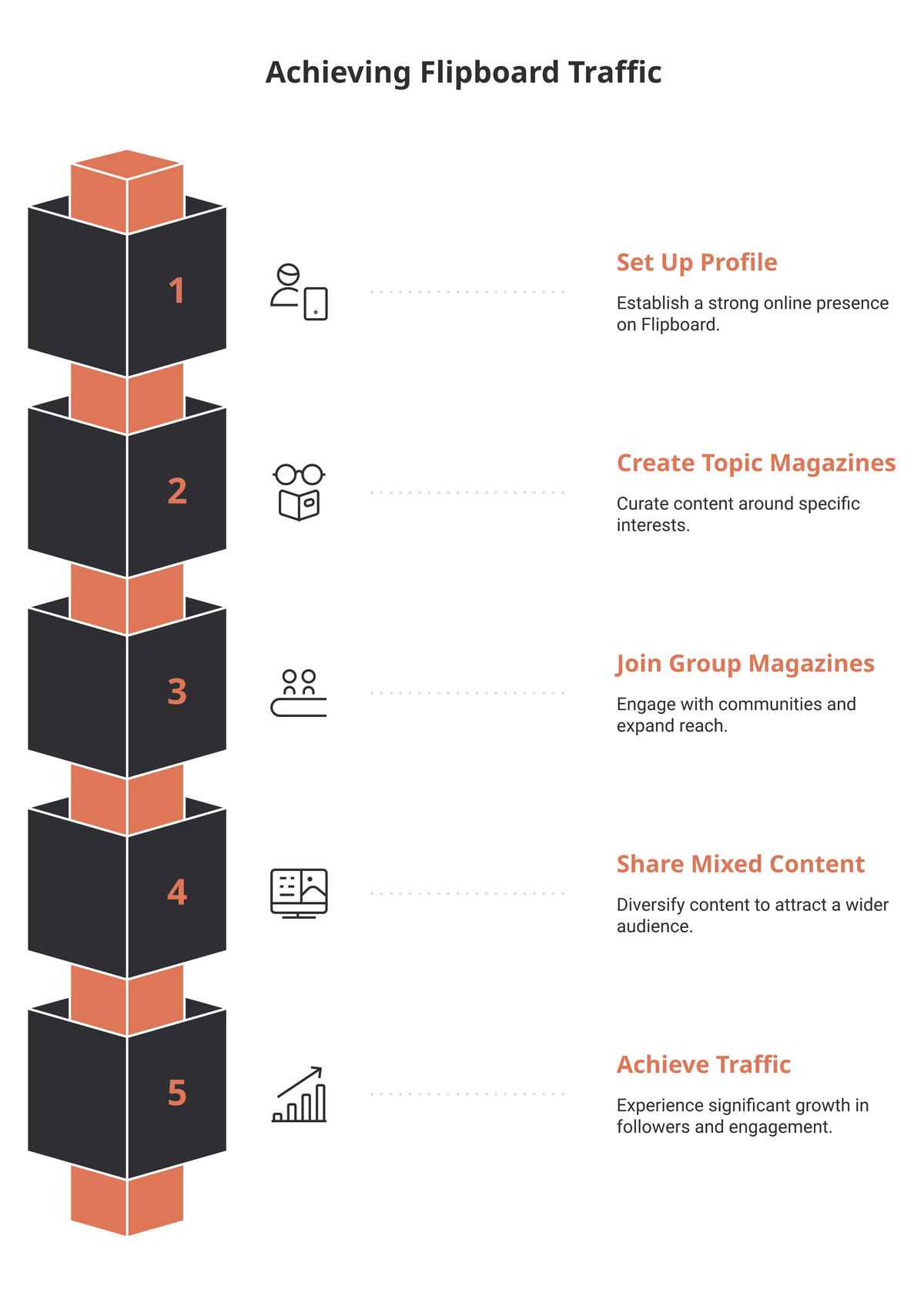
Publishers have access to analytics for tracking traffic from individual magazines, but a significant portion of traffic comes from the user’s profile. It typically takes 6-7 months of consistent effort to start seeing sizable traffic from Flipboard. The transcript emphasizes the potential for driving substantial traffic independent of Google’s algorithms.
Advanced Strategies and Best Practices
Advanced strategies discussed include joining relevant niche communities, cross-promoting content across magazines, and being an active community member by sharing others’ content. Best practices include adding social sharing buttons, publishing consistently, and being courteous to other Flipboard users.
My Take: What This Means for Solo Publishers
Michael’s framework is solid, but Flipboard has changed significantly since this presentation was recorded — and the change affects whether you should invest in it at all.
The headline number first: according to Press Gazette’s publisher traffic data, Flipboard referrals have dropped 61% since 2019, down to roughly 22 million monthly referrals across the entire platform. That’s the pie your 6–7 months of effort is competing for. For comparison, Google Discover can deliver that for a single mid-size publisher in a good month.
The fediverse angle changes the math — but not by much. Flipboard has gone all-in on the open social web, letting publishers federate their profiles so content surfaces on Mastodon, Threads, and other ActivityPub platforms. In theory, your Flipboard presence now extends to the entire fediverse. In practice, when someone clicks through, the referrer shows as Mastodon or Threads — not Flipboard — so you won’t see the impact in your Flipboard analytics. Flipboard is also experimenting with “social websites,” letting publishers build their own decentralized presence without relying on any single platform’s algorithm.
What’s still worth doing as a solo publisher: Connect your RSS feed and apply for Publisher status. This takes maybe two hours and runs on autopilot. Your content gets indexed and you participate in the fediverse distribution experiment for free. Skip the heavy magazine-curation grind — that’s a full-time community manager job, and the traffic ceiling relative to the time cost is brutal. If you’re already doing platform diversification — building on Medium, developing your email newsletter, working Google Discover — Flipboard makes sense as a low-maintenance addition, not a primary channel.
The affiliate angle specifically: Flipboard readers tend to be content consumers, not buyers. I wouldn’t build a monetization strategy around Flipboard traffic. The diversification play here is primarily about reducing Google dependency and getting referral diversity in your analytics — not affiliate conversion volume. If you’re spending serious time on social traffic for affiliate purposes, the affiliate SEO approach still delivers better ROI.
Bottom line: get your RSS connected and federate your profile. That’s the 2026 version of this strategy. The group magazine hustle Michael describes made more sense when Flipboard had real referral momentum — that window has largely closed.
Action Items
- Set up a Flipboard profile with a clear name, description, and profile photo.
- Create 10 or more magazines to organize content by topic or niche.
- Join relevant group magazines and invite contributors to your magazines.
- Share a mix of original and curated content with engaging headlines and visually appealing images.
- Monitor analytics and re-share popular content across multiple magazines.
- Clone or syndicate existing content with updated headlines and images for Flipboard.
- Join niche communities and create magazines to attract a broader audience.
- Be an active community member by sharing others’ content and following contributors.
- Add Flipboard social sharing buttons to your website.
- Publish content consistently, aiming for at least a few articles per day.
- Be courteous to other Flipboard users and follow group magazine guidelines.