Mastering Ahrefs for Increased Website Traffic and Ranking
In a comprehensive presentation, Andrei Tit from Ahrefs outlined a series of effective tactics to boost website traffic and improve search rankings. This blog post transforms his detailed presentation into an accessible and engaging format, perfect for SEO enthusiasts and professionals looking to le

In a comprehensive presentation, Andrei Tit from Ahrefs outlined a series of effective tactics to boost website traffic and improve search rankings. This blog post transforms his detailed presentation into an accessible and engaging format, perfect for SEO enthusiasts and professionals looking to leverage Ahrefs’ powerful tools.
Targeting Keywords on Page 2-3
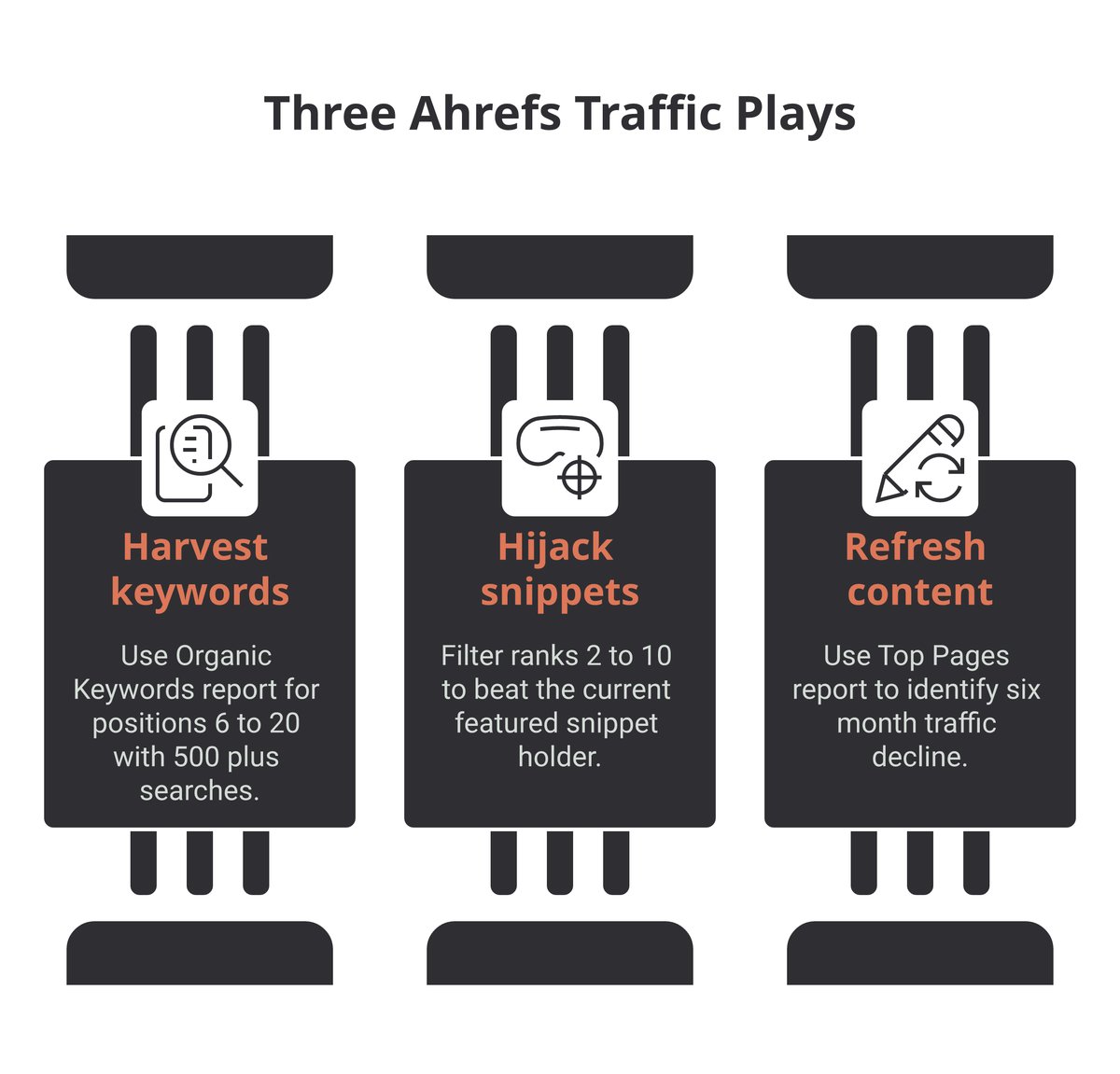
Tit began by focusing on the potential of “low-hanging fruit” keywords. He detailed how to use Ahrefs’ Organic Keywords report to identify keywords ranking on Google’s second and third pages. By filtering for keywords with 500+ monthly searches and positions 4-15, users can pinpoint opportunities to optimize these keywords for quick traffic gains.
Writing Better Featured Snippets
Next, Tit discussed strategies for capturing coveted featured snippet spots. He recommended using Ahrefs to find opportunities by filtering for rankings of 2-10, excluding the domain currently holding the snippet. By analyzing competitors’ snippets for these keywords, users can identify better angles and content to usurp these spots.
Refreshing Low Traffic Content
Another key tactic Tit highlighted was the importance of refreshing underperforming content. Utilizing Ahrefs’ Top Pages report, users can identify pages with declining traffic over a six-month period. He advised checking the primary keyword ranks for these pages and updating any low-quality or outdated content.
My Take: What This Means for Solo Publishers
Andrei Tit’s tactics are solid, but there’s a gap between “here’s what Ahrefs can do” and “here’s what I actually do with it on a portfolio of affiliate sites.” Let me bridge that.
The page 2-3 play is still the highest ROI move in Ahrefs. I run this sweep every 60-90 days across all my sites. The trick is filtering tighter than Tit suggests — I go positions 6-20 (not 4-15) because positions 4-5 often already get decent clicks and need less intervention. Positions 8-20 are genuinely stuck. For affiliate sites, I then cross-check whether these keywords have commercial intent and Amazon/product SERP features before spending time on them. Ranking position 10 for an informational “what is X” query won’t move revenue.
On content refreshing: this is where the real money is. Ahrefs’ Top Pages report sorted by 6-month traffic decline is the closest thing to a free audit you’ll get. I run this quarterly and it consistently outperforms new content production ROI-wise. The systematic content reoptimization framework approach — where you treat refreshes like a pipeline rather than one-off fixes — is how you scale this without burning out. Also check data-driven content strategy lessons for how veteran publishers prioritize what to refresh vs. what to kill.
One thing Tit doesn’t cover: Ahrefs now tracks AI search traffic separately in Web Analytics (2026 update). If you’re not watching how much of your traffic is coming via AI Overviews vs. traditional organic, you’re flying blind. The data is showing that 99.5% of AI Overview sources already rank in the top 10 organically — meaning ranking traditionally is still the prerequisite for AI visibility. Nothing’s changed on that front.
On backlinks: Ahrefs’ 2026 research confirms that referring domain count matters more than raw link volume, and SpamBrain 3.0 is now algorithmically neutralizing high-DR links that generate zero referral traffic. This validates passive link building through data studies over chasing DA metrics. The link building strategies that actually move rankings are the ones that earn traffic too — not just editorial mentions. Solo publishers should stop measuring success by DR of linking sites and start asking: did this link send any actual visitors?
Bottom line: Ahrefs is worth every dollar of the subscription — but only if you’re running these reports on a schedule, not ad hoc. Build the habit, not the one-off audit.
Action Items for Leveraging Ahrefs
Following Tit’s presentation, here are actionable steps to optimize your site’s performance using Ahrefs:
- Optimization Research: Next week, explore how to improve the ranking of keywords that are currently on pages 2-3 of Google’s search results.
- Featured Snippet Analysis: Over the next month, analyze top competitors’ featured snippets for core keywords and identify opportunities to create better content.
- Content Audit: In Q2, audit your site’s low-traffic pages published over 12 months ago and identify opportunities for content refreshes.
Conclusion
Andrei Tit’s presentation from Ahrefs offers valuable insights and practical steps for using Ahrefs to enhance website traffic and search engine rankings. By targeting specific keywords, improving featured snippets, and refreshing old content, SEO professionals and website owners can effectively use Ahrefs to drive better search performance and leverage the latest features for comprehensive analysis and reporting.